

George Rebane
Today we break bread and hoist a glass with friends to celebrate the anniversaries of a number of auspicious events that happened on August 8th. Among these was America’s signing the UN charter in 1945, and Richard Nixon resigning the Presidency in 1974. Perhaps not so well known is the Estonian tribes’ victory over Sweden near the town of Lihula in 1220.
Lihula (translates to ‘butchers’ village’) was the Estonians’ last major victory against invaders (Swedes, Germans, Russians) from three sides who ultimately defeated the loosely knit tribes, and then took turns fighting each other as they ruled and ravaged the country for the next six centuries. During this interval Estonian peasants rose up against their foreign masters about every 70 to 80 years only to have their rebellions be ruthlessly put down.
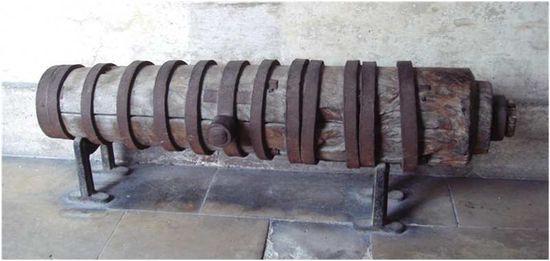
With the advent of gun powder, Estonians secretly made their own cannons for besieging the local fortresses that housed their rulers. However, because steel was expensive and hard to fashion, Estonian cannons were made of thick oak staves banded with steel usually pilfered from the wheel rims of the ruling nobles. Until it was time to use them, these wooden cannons were hidden deep in the forests. There they dried until the cracks between the staves were too large to effectively fire a cannon ball. (The photo shows a 19th century Vietnamese wooden cannon of similar design.)
To reseal them in preparation for battle, the cannons were moved in the dead of night to a nearby stream or bog, and placed into the water to soak and expand, thereby making the wooden tubes tight again. To this day Estonians acknowledge the coming time of trouble and tribulations by asking each other, ‘Kas paneme kahurid likku?’, which translates to, ‘Should we start soaking the cannons?’


Leave a comment