

George Rebane
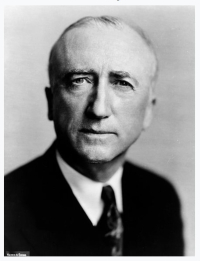 I recently finished reading a most fascinating and informative account of the international geo-strategic process of decision making by the Allies during WW2. The work titled Speaking Frankly (1947) by James F. Byrnes (here), diplomat, jurist, and politician extraordinaire, was a command performance and hit the top of the charts when it was published in October 1947. (In these pages we first met Byrnes in ‘America’s Foreign Policy’)
Byrnes concludes his ‘diplomatic chronology’ of the war with new challenges for making and keeping the peace after hostilities ended in 1945. The problem was the USSR. Dealing with them had been difficult during the war since they were ousted from the Axis powers by Hitler’s double-cross in 1941, after which they quickly became the second (some say ‘first’) front of the Allies against the Nazi war machine.
Byrnes concludes his considerable tome with the Book IV chapters ‘Building a People’s Foreign Policy’, ‘Control of Atomic Energy’, ‘What Are the Russians After?’, ‘Where Do We Go from Here?’. It is the last two chapters that concern us.
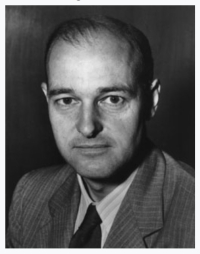
But before we consider these, let’s turn to George F. Kennan (here), accomplished and enigmatic diplomat with some outrageous social views. More importantly, he was our Russia expert, fluent in Russian, who during the war in 1944 was made ‘deputy chief of mission’ in Moscow under ambassador Averill Harriman. During this service Kennan developed a detailed and highly accurate understanding of the USSR, Stalin, and the international communist movement. He was the vociferous critic of America’s foreign policy who launched his post-war career with the now famous ‘Long Telegram’ (1946) which he sent to President Truman through his then SecState boss James Byrnes.
 So here comes the conundrum. Byrnes, who experienced the long, detailed, and frustrating negotiations with the Russians firsthand during and after the war, concluded that Soviet leaders were a bunch of totalitarian lying sonsabitches who could not be trusted to carry out the provisions of any treaty that they finally deigned to sign. Time and again he watched the Soviets undermine duly elected/established post-war, east European governments, and bring them under communist regimes in preparation for ultimate membership in the USSR’s expanding coterie of soviet republics and compliant client states when the Iron Curtain finally dropped in the spring of 1948.
Yet Byrnes kept trying to wring out of the Soviets the remaining and still missing peace treaties with major governments like Germany and Italy, which were now occupied countries under martial law administered within the framework of the existing armistices that each signed after the guns were silenced. Truth be told, an overarching reason for Byrnes continuing to treat the USSR honorably was to employ and promote the functions of the then nascent United Nations, the institution in which many in the free world had faith in becoming the successful international peacekeeper.
What Byrnes totally missed in his chronology, especially in the concluding chapters, was the message that millions of east Europeans were delivering with their tragic and travailed travels pushing westward toward territories conquered by the western Allies. Their story is told in The Long Road Home: The Aftermath of the Second World War (2011) by Ben Shephard. From reviews we read “Mindboggling seas of people shifted across Europe during the 1940’s , … a rather depressing testimony covering a period of history that has been largely neglected for reasons the author reveals.” “But what is rarely addressed is what this book is entirely concerned with – the sheer staggering scale of the numbers of dislocated and dispossessed people, the refugees, the homeless and the stateless, some innocent, some not, some Jewish but most not.”
This little-known volume by a British historian recounts one the most impactful sagas of human experience in the history of mankind. Between 1943 and 1948 more than twenty million and perhaps as many as thirty million east Europeans massed and migrated westward, ever seeking to avoid being captured and returned by Stalin’s Red Army. When the war ended in 1945, they just kept coming. walking on clogged roads and in trains, packed with families carrying suitcases and bundles of belongings with contents that connected them to their past lives and also with some necessaries for survival until the next sunrise. None who witnessed this mass migration had ever seen or even heard of such a desperate movement of millions. (The Rebanes carrying their ragtag suitcases were an intimate part of the ‘them’ that came.)
These people knew what life under totalitarianism was like and more importantly what was the real objective of Stalin’s brand of international communism. Byrnes never noted nor asked why these millions were still starving and dying on the roads westward when there was peace again in Europe and they could return to their native lands. What did these people know that evaded him?
None of this, from the aims of communism to the mass movement of millions, was a mystery to Kennan. Already in 1946 he saw the meaning and future portents of the history that was being made. And he thought it important enough to spell out to America’s leaders in great detail what he understood in a confidential diplomatic novelette (almost 8.000 words) that came to be known as the Long Telegram, whose transmission stressed the telecom technology of the times. Yet, as Byrnes’ chronology makes clear, Kennan’s warnings and assessment were ignored in the first years after the telegram was received. Only after the Iron Curtain fell in 1948 did people begin recalling and reviewing what Kennan had written.
By this time both Kennan and Byrnes had had their fallings out with the Truman administration. Kennan continued to promote a new and no-nonsense dialog with the Soviet sonsabitches, and counseled the west’s acceptance of new policy of peace to halt the spread of USSR sponsored international communism. This new policy called for the ready use of force to stop communist expansion – in short, to avoid fighting WW3, Kennan called for the US-led west to fight limited brushfire wars wherever and whenever the need arose. History shows the uneven success of this policy which was adopted by most developed western countries, and even supported through the ministrations of the United Nations. We won a few and lost a few, but in the end the USSR collapsed and there has yet to be a WW3. Kennan’s foresight nailed the post-war history we have experienced.
But it’s not possible to conclude that our political leaders, especially of the Left, have learned much from these intervening decades in dealing with collectivist authoritarians. It appears that the Byrnes approach to diplomacy still dominates of how we deal with the world’s scoundrels – a posterchild of such failed negotiations and agreements is the kabuki dance we have adopted with Iran’s mullahs. Hanging fire in various stages of confusion are agreements with Putin, Xi, and the Ugly Fat Kid.
And the ultimate conclusion we can draw from the evidence so far is that collectivism remains a a constant and viable siren song used to soothe both the world’s poor and the pampered. Its various forms – socialism, Marxism, ‘classical communism’, … – remain the ready tools of politicians from the schools for scoundrels to the know-nothing bleating hearts seeking to impose their various utopias. There is no reason to believe that we will ever purge collectivism from the assembly of accepted and attractive means to organize society.
Coda – Why collectivism is intrinsically anti-science and doomed to fail. This little add-on is based on the teachings from systems sciences and observations of the natural order. It forms the almost axiomatic foundation of Rebane Doctrine. The following is drawn from a recent communication with a learned friend who unfortunately leans to the left.
But in the final analysis, I’m most interested in, say, how you reconcile acceptable/desirable public policies with the implementation of which require ever larger government, higher taxes, more regulations, and byzantine bureaucratic processes to get things done – i.e. in short, the destruction of the Bastiat Triangle. Don’t we at least agree that the foregoing attributes are not in the desiderata of anyone acquainted with what the systems sciences teach about the construction of models that explain/predict the behavior of large-scale stochastic systems?
In a shortened version this dictum says – Don’t devise systems the transfer functions of which are not and cannot be known, and therefore these become both unobservable and uncontrollable. Comprehensive governments of large complex socio-economies are clearly that kind of system. Nature gives us a massive hint on how to proceed – establish minimally connected structures that are maximally distributed, locally controlled, and require the least outside knowledge (data & info) for survival and sustainability.

 rebanesruminations.com
Leave a comment