

George Rebane
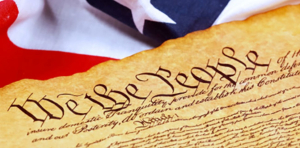 America’s Constitution is one of its prime founding documents. Founding documents of any social order – nation-state, kingdom, tribe, … – are written and disseminated to define the durable component of that order to its members. Even monarchs and dictators who rule by force and at their whim have issued decrees that define a new scheme intended to last sufficiently so as to allow their subservients to order and organize their lives. Such documents serve no function if it is known that tomorrow they may again change.
Founding documents are therefore drafted with great debate and contention to hammer out a work product that all parties see as a durable social contract upon which long-term plans may be made and based, and which will define the structure of governance and a stable foundation for generations. Founding documents represent the sum total of a society’s wisdom, forged through the politics of their time, that its elected or endowed leaders are able to bring to bear.
From time immemorial the wise of a society have known that the sentiment of the public square is capricious, often with destructive and deadly after effects. This is a baked-in human attribute that even the people themselves comprehend and have come to dread. With this understanding they have therefore been willing to trade some of their liberties and wealth for a stable and secure social order. In response, wise rulers and leaders have made such founding documents hard to change. As with our Constitution, changes to it are possible, but these must follow known and deliberative procedures that can only proceed at a very dignified pace. This has served us well for almost two and a half centuries.
No one argues that during its life our Constitution has had to endure numerous assaults. Heretofore these assaults have been few and focused always on some or other particular provision. Today we have added changing the permanence of the Constitution, many calling it “an 18th century relic”. The Constitution’s constancy is under targeted assault by a contingent of collectivist elites who are bent on fundamentally transforming the United States of America by leading a substantial contingent of our lightly read and/or neurologically challenged who have been subjected to almost three generations of being taught that America is the globe’s malignant tumor.
The primary tack for this transformation is to be achieved through the wholesale purchase of more votes through 1) the modern embodiment of the state providing unending bread and circuses, and 2) the de facto importation (through porous borders and lax immigration policies) and subsequent enfranchisement of illegal alien hordes who then become securely bonded to prominently positioned progressives to whom they owe their welcome and weal.
As part and parcel of this assault, today we debate whether and how Americans should count ourselves, and those who live in our midst illegally, so as to establish the basis for our federal benefits and representation in Congress. Our Constitution has some very specific guidance for such countings. Section 2 of the 14th Amendment clearly states that only citizens can vote, and only the number of citizens determine representation in Congress. The 15th Amendment underlines that it is “the right of the citizens of the United States to vote”; nowhere in our carefully amended Constitution is that right provided for anyone else.
Those among us who are bent on America’s fundamental transformation are also bent on an interpretation of the Constitution as a bendable document that should respond to whatever the selectively assembled are prompted to shout from the public square. Their argument demands being responsive to the malleable demands of the multitude – ‘after all we are a democracy, and the people should get what they want when they want it.’ The trouble is that we are not a democracy, and the last thing thinking people want is to live under a founding document that flaps capriciously in the winds of the moment before becoming a shredded remnant.


Leave a Reply