

George Rebane
The so-called Valemax bulk carrier ships at 400,000 tons deadweight are among the largest vessels on the world’s oceans, each being almost 1,200 feet long with 200+ foot beam and drawing about 75 feet fully loaded. The ship class was chartered by Vale SA, a Brazilian mining company, to carry iron from Brazil to the world’s markets. China, after some foot dragging prohibited Valemaxes calling in their ports, has now changed its mind and ordered its shipyards to start building 30 Valemaxes to the tune of $2.5B. The ship’s size lowers its ton-mile transport costs by 25-30% over existing very large vessels. Today there are about 35 of these behemoths in service. (more here)
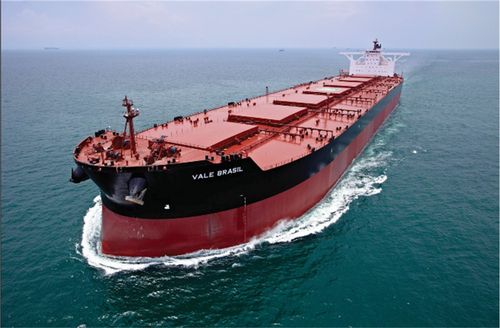
What interests me is what drove Vale to introduce such ships that are larger than a modern nuclear carrier (over four times the displacement) in every dimension. Brazil export markets have a location problem – the sources of their bulk ores, ag products, etc are situated farther than their competition from where they are being consumed or further manufactured. In short, they are off the beaten path where there is an added cost to get their stuff onto the beaten path, and that makes their exports cost more. One obvious way to become more competitive is to reduce transportation costs to their markets, hence enter the Valemaxes.
(That China is now planning to eat the lunch of the world’s bulk carriers is another story for another time. Stay tuned.)
So how does Nevada County fit in? Readers know that for years RR has been dunning those who promoted manufacturing in these foothills as a solution to our economy’s growth. An obvious reason (there are others) why manufacturers have left the county is that we too are located off the beaten path. It costs extra to bring raw materials up from the I-80 corridor distribution and transportation hubs, and it costs more again to get our products down the hill to places where they then begin competing with similar stuff made a few minutes away.
The obvious question then is what can we learn from the Valemaxes. All other problems to manufacturing here being equal (adequate worker pool, cooperative local government, econut sanity, NIMBYs neutralized, …), would NC manufacturers be able to compete on cost were we to have a regularly scheduled service of very large trucks – our Valemaxes – plying up and down Highways 49 and 20 to move raw materials and goods between a west NC freight depot and distribution centers in the greater Sacramento area?
Such a service could be operated by established transport companies like UPS and Fedex. Local manufacturers would be responsible for getting their stuff to and from the depot in a timely manner given the scheduled departures and arrivals of the ‘Valemax trucks’. The parcel delivery companies could, of course, also service the local transport needs with their existing smaller vehicles as part of the ongoing operations. Additional features might be incorporated from seaborne freight like smaller standardized secure containers that could be efficiently loaded and unloaded (e.g. palletizing) at Valemax depots and transferred onto smaller vehicles for local transport.
The bottom line is that unless we have some means to level the playing field in the cost of moving materials, manufacturing will continue to languish, if not altogether disappear, in the GV-NC region of Nevada County. I have no idea whether this concept will pencil out given what remains of our manufacturing industry, or whether we could solve the chicken/egg problem of attracting new manufacturers with the promise of starting such a Valemax truck service. But given how hard economic development has been in the county, it might be worth taking a closer look at the numbers and what’s involved in pulling this off.


 rebanesruminations.com
Leave a comment