

George Rebane
When tyrannies make the laws, all opponents of tyranny are then seen and treated as criminals.
The ownership and control of our public lands is a mess, both legally and constitutionally. Save for military bases (an arguably constitutional provision), why does the federal government claim ownership – laughably in the name of ‘the public’ – of large parts of the country? Save for preserving certain particularly scenic locales as public parks, why do states need to own land? (I find federal ownership of land for parks and recreation to also be constitutionally unfounded.) Yes, there are reasons for state governments to share control of ‘infrastructure land’ that contain navigable rivers, flood control dams and levees, and water reservoirs, but owning thousands of square miles of open range, mountains, and forests, the case for such has no reasonable constitutional basis.
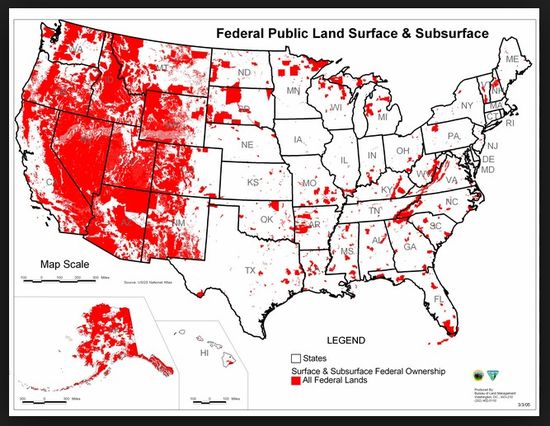
(Recall the definition of ownership, you ‘own’ something only to the extent that you can dispose of it as you wish.)
Due to the Bundy Ranch gathering of citizens concerned with the jackboot behavior of various fed and state agencies, the BLM has decided to withdraw in order to regroup and replan their next assault, because they apparently expected none of what happened – e.g. consider the set aside of a little ‘First Amendment Rights’ pen for the few people who might show up to quietly protest as permitted by their betters.
I was heartened that this event finally demonstrated what can happen when citizens ‘just say NO!’, both in their courage to unambiguously state that a limit to overreach had been broached, and also by the rapid gathering of supportive citizens who were willing to take an unknown risk against militarized government units armed with machine guns, snipers, and helicopters. I hope that this might set an inspiring example for locals all over the country to resist the next diktat that comes down from above to perfunctorily limit more of what/how/when people can do, say, wear, eat, build, travel, stay, read, watch, learn, work, recreate, worship, display, spend, receive, join, … . If the Bundy standoff can serve as the starting point for Americans everywhere to change their recently inbred docile acceptance to one of critical examination and consideration before compliance or its rejection, then this will have been a productive milestone on the road back to liberty. (Nevada County electeds please take note.)
As to resolving the grazing on public lands matter, I expect that the feds will be back after an appropriate media propaganda blitz that will demonize the Bundys and others who may have similar thoughts. Here we can hope that this will raise the country’s awareness of the public lands issue, and after appropriate debate, lead to a resolution that gets the feds out of the land management business and, perhaps, shuts down a tax consuming bureaucracy. Important and exciting times ahead.
[19apr14 update] Contrary to the somewhat bombastic interpretations of our progressive constitutional pundits, the legitimacy of federal retention of vast tracts of western lands is being called to question by lawmakers in western states (more here). The historical legality of such federal retention which I and a number of other observers have criticized is now coming to the attention of some of our conservative political leadership. The bottom line is still that the feds have usurped the states’ intended rights to own and control (i.e. dispose of as they will) public lands within their borders, and a progressive judicial system has made mockery of the clear original intent of the Constitution in this matter.
Perhaps now a reasoned debate can start on the most appropriate process through which we can erase the overwhelming amount of the western red areas in the above map. To be sure, the big government collectivists will fight tooth and nail to retain as much central control of domestic policies in Washington as possible. America’s historical standards of liberty and self-determination demand the devolution of such central controls to the states and counties where the people live.


Leave a Reply