
Rebane's Ruminations
April 2013
S M T W T F S
 123456
78910111213
14151617181920
21222324252627
282930  

ARCHIVES


OUR LINKS


YubaNet
White House Blog
Watts Up With That?
The Union
Sierra Thread
RL “Bob” Crabb
Barry Pruett Blog

George Rebane

Big pharma has been playing a very dubious game that doesn’t speak well of free markets, and free enterprise.  Over the years its lobbyists have convinced Congress to put in place some pretty dodgy laws that allow it to skirt the legal edges of what most people understand about anti-trust strictures in this country.  The name for the practice is ‘pay for delay’.
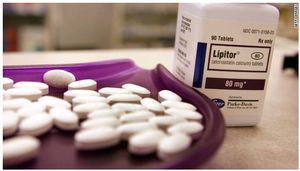
LipitorHere’s the short version.  As a big pharma’s patent on a very profitable drug approaches expiry, or another smaller pharma has cracked the code on how to circumvent the patent, the big and smaller company strike a deal to screw the consumer by keeping the price high and the market share of the big company intact.  We all know that as a drug ‘goes off patent’ other pharmas enter the market with knock-off generic versions of the drug at greatly reduced prices.  After all, they didn’t have to pay for developing the drug or the costs to build the market for it, therefore they have no recovery accounting to do in their financial planning.

So what happens?  Well, the big pharma company approaches the smaller company that is the presumed threat, and says ‘we’ll pay you $X under these terms to delay your entry into our drug’s market with your generic version, whaddya say?’  Of course the deal works the other way also with the smaller company approaching the big company saying, ‘We’re about to launch a generic version of your big blockbuster drug that will plummet your financials and share price into the mud.  We want $X under these terms to delay the introduction of our generic version, whaddya say?’

And what can we make of that? it’s clearly price collusion to the detriment of the consumer.  But the involved entities are private companies dealing with their very own intellectual properties.  Why should it be anyone else’s business regarding how they settle their affairs?

We all know the socialist/progressive echo chamber here – they don’t think much of private property to begin with – ‘you developed it using public roads for transport and public police for security and …, therefore the damn thing already belongs mostly to the public’.  In short, “You didn’t build that!”  But let’s put this aside for a moment.

As a conservetarian and dyed-in-the-wool capitalist, I could cite chapter and verse from the Austrian school, and tell the Left to go pound sand.  But on second thought, if with what little social consciousness I’m allowed 😉 I consider the situation from the perspective of the (hang on now) capitalist collective, I might come up with a different response.  I do want anyone who develops a beneficial drug that helps millions to get one helluva reward, but do I want them to get it forever?  Maybe I do, since that will draw other competitors to develop better alternatives to get a piece of that pie themselves.

Or do I want someone to come in from the side (usually carrying a very large gun) and tell the pharma what the ‘fair reward’ will be for their risk, expense, and labors.  We kinda already do that with limiting the lifetime of patents – you gotta get it while you still got it.  I dunno, it’s a hard problem that SCOTUS is chewing on right now (more here).  Thoughts?

H/T to a RR reader for the heads up on this.

Posted in , ,

27 responses to “‘Pay for Delay’ – a capitalist quandary”

  1. Joe Koyote Avatar
    Joe Koyote

    Speaking of Austrian economic theory, what do you know about the “spreadsheet” error that Paul Krugman and many others are saying renders Reinhart and Rogoff’s study useless and directly rebuffs the entire “austerity” movement as ineffective at getting the economy going again?

    Like

  2. Ben Emery Avatar
    Ben Emery

    The patent laws need major reform and the pharmaceutical industry is the worst offenders of the outdated system. The other part of R&D a vast majority of it is done with public-sector research institutions (PSRIs).
    http://www.nejm.org/doi/full/10.1056/NEJMsa1008268#t=articleResults
    There is another factor big pharma, I believe the US is the only developed nation that allows direct-to-consumer advertising.
    http://publicrelations.uncc.edu/news-events/news-releases/study-finds-%E2%80%98big-pharma%E2%80%99-fails-self-policing-ed-drug-advertising
    Then you throw into the biggest scam of all Medicare Part D where the largest purchaser of pharmaceuticals on the planet cannot negotiate for lower prices. It also makes purchasing drugs outside the US borders illegal. It is cronyism at its worst providing a $160 billion annual boom to the pharmaceutical industry.

    Like

  3. Paul Emery Avatar

    Interesting question George but even more inteesting is the question of whetner a private company can patent DNA. Check this out, it’s before the Supremes. Oh my. What a wonderful world. Soon we may have patents on body organs or skin.
    “The U.S. Patent and Trademark Office (PTO) has granted thousands of patents on human genes – in fact, about 20 percent of our genes are patented. A gene patent holder has the right to prevent anyone from studying, testing or even looking at a gene. As a result, scientific research and genetic testing has been delayed, limited or even shut down due to concerns about gene patents. ”
    http://www.pubpat.org/brca.htm

    Like

  4. George Rebane Avatar

    PaulE 945am – Even though it takes risk, effort, and cost to isolate a gene and demonstrate its function, I don’t believe that such gene patents should be issued (and these should instead be retracted). The discoverer of an existing naturally evolved gene should not be able to claim it as their intellectual property, no more than a physicist can claim the discovery of the Higgs boson to then belong to them or their institution.
    However, I do believe that specific newly invented processes that harness the power of or manipulate the structure of a gene should be classed as IP that can be patented. Others can and should be able to patent other processes for the same gene that perform the identical function. This has been standard practice forever.

    Like

  5. George Rebane Avatar

    To be more inclusive here 😉 I have to recount the practice of ‘Buy and Bury’ attributed to Microsoft that started many years back. MS would see a small company about to introduce a new/improved technology/product that would jeopardize the market share or growth prospects of something they were already selling or developing. Their response policy was practical to its essence – they would simply buy the company and bury its technology, invoking it only in a ‘cease and desist’ warning to anyone else who later came close to introducing something similar.
    To be fair, MS also bought many companies and incorporated their technologies into existing and new MS products. The bottom line to both practices was that they made the sellers/founders rich and served the interests of MS shareholders. Both parties walked away very satisfied, and the consumers never knew what they had missed.

    Like

  6. Paul Emery Avatar

    George re 10:42 AM
    We might be reaching the limits of capitalism here and acknowledging that the DNA of the human body is indeed a commons. The way the current law reads DNA can be owned by those who develop a use for it. No wonder the newer so called “miracle drugs” are so expensive that they are not available top those without insurance. One more reason for universal health care and reform of the pharma industry.

    Like

  7. Wayne Hullett Avatar

    What makes ‘Pay for Delay’ possible is the six month exclusivity period in which the FDA gives one company exclusive permission — see
    http://en.wikipedia.org/wiki/Generic_drug#Exclusivity
    to produce and market the generic version of the drug that has just gone off patent. It is like a six month patent for the generic maker. The ‘Pay for Delay’ is usually for just this six month period. This is what happened with Pfizer’s Lipitor (although in Lipitor’s case there was other smelly sausage making going on in the background – see
    http://www.nytimes.com/2011/11/12/health/plan-would-delay-sales-of-generic-for-lipitor.html?_r=0
    Thus the drug inventor has only to pay off one generic maker in order to keep their high profit margin for an additional six months. Then, when the drug can be sold by any maker of generics, the competition causes the payoffs to become too expensive and the price of the drug eventually drops.
    One could argue that ‘pay for delay’ only effectively extends patent protection from 17 to 17 ½ years, so what’s the big deal. You only have to stand the bad taste in your mouth of this legal bribery for six months, not forever. One could also argue that the prospect of a huge cash payoff from the branded drug manufacturer encourages generic makers to quickly perfect their generic formula so as to be first in line to get the exclusivity nod.
    I do not know the rationale for the exclusivity period in the first place – I suspect this is another example of the Law of Unintended Consequences and the inability of lawmakers to do any kind of systems thinking that does not involve getting campaign contributions and staying in office.
    My own view is that the foundation of capitalism is competition. If there is no competition then the system does not work. These kinds of ‘working the system’ backroom payoffs to limit competition make the screwees cynical and should not be allowed. I would also remove the exclusivity period as it serves no purpose of which I am aware.

    Like

  8. George Rebane Avatar

    PaulE 929pm – Good diagnosis, bad prescription.
    WayneH 1025pm – Agreed.

    Like

  9. Wayne Hullett Avatar

    While we are on the topic of corporations screwing consumers, perhaps we could also take a look at ‘slotting fees’ — the practice of supermarkets demanding, and manufactures paying – for the shelf space for their products. See, for example,
    http://www.sfgate.com/business/article/ANALYSIS-Grocery-stores-demanding-pay-for-shelf-2809652.php
    Recently I was at the market looking for a specific brand of product when the manager happened to walk by. I asked him about the product and neither of us was able to find it. I remarked that perhaps the manufacturer was not willing to pay as much for the shelf space as their competitors were for their (inferior, in my opinion) products. He (surprisingly) agreed. I then asked what the difference was between paying for shelf space and bribery and he said he did not know!
    I understand that shelf space is a limited resource that a retailer has (the right) to allocate optimally. The problem I have is with their practice of monetizing it directly. This results in inferior products displacing better ones, and the consumer getting the privilege of paying for this screwing through higher prices, without even the courtesy of a reach-around.
    Again, this is a case of an agreement between two private companies – should a gun bearing government ban it? One could even argue that competition is not being thwarted – any company could offer a higher bribe, er “fee”, for the shelf space. Is there restraint of free trade here?
    It seems to me that there is something wrong here, but I can’t quite put my finger on exactly what it is. What do others here think?

    Like

  10. Russ Steele Avatar

    Wayne@11;23PM
    When we cannot find the product on the shelf, we go to Amazon. We have been disappointed so many times we now just start with Amazon, and do not even bother with the going to the store. With Amazon moving to same day delivery, the one-two day wait for delivery will soon be over. The value of buying and selling shelf space may soon be the least of the stores worries.

    Like

  11. George Rebane Avatar

    WayneH 1123pm – I became aware of ‘slotting’ in the late 90s while at Bizrate. A little research revealed an extremely complex market for shelf space that is not one-sided. It depends on the size of the retailer and his order book with a distributor or manufacturer. Smaller retailers are forced by suppliers to place their products in more advantageous slots if they want to carry the product. Of course, with bigger retailers it works the other way around.
    Bottom line is that a store shelf has a very complex and complete technical description by distance from end of aisle, height from floor, proximity to other products, etc. And there are very sophisticated optimization programs that map out existing sweet spots over which supplier and retailer dicker.
    I entered this fray myself when I realized that a web page has similar properties and developed the technology for quantifying and optimizing ad and product placements on Bizrate’s website. We also introduced this technology to our retailer customers. Now it is an established part of what’s called web analytics.
    Russ’s 659am solution works best if your retailer doesn’t respond to your request to carry or better place something. Bottom line – vote your dollars, whether by mouse click or your feet.

    Like

  12. Paul Emery Avatar

    George
    At least you recognize the disease. What do you prescribe as the prescription to end DNA monopolies?

    Like

  13. Joe Koyote Avatar
    Joe Koyote

    GMOs should also a be a part of this discussion. Take, for example, Monsanto, who runs around the world filing suits for patent infringement on farmers whose crops got polluted by GMO pollen floating in the air. I have yet to hear of a suit that they have lost as farmers can’t afford the high powered lawyers and money needed to combat Monsanto even though a “theft” never actually occurred. It should be the farmers whose seed stock got ruined who are suing Monsanto instead.

    Like

  14. George Rebane Avatar

    PaulE 1136am – Please reread, I gave my remedy in my 1042am. End the practice, abrogate the patents.
    If a company discovers a gene that is pharmaceutically important, then it can keep that discovery as a trade secret and use the knowledge therefrom to develop any drugs it wants.

    Like

  15. George Rebane Avatar

    JoeK 1203pm – Agreed. The onus should be on the GMO manufacturer to prove that the farmer did something illegal beyond being the beneficiary/victim of a naturally occurring process called wind. Have no idea how another ‘guilty until proven innocent’ facet got added to our already dysfunctional legal system. But I do suspect corporate money and political corruption played a part. Good point Joe.

    Like

  16. Joe Koyote Avatar
    Joe Koyote

    “But I do suspect corporate money and political corruption played a part”.. I would add an increasingly suspect judicial system as well. These questionable decisions become part of case law and precedent for future cases. Once something becomes established and remains unchallenged it becomes the law of the land. Lower court judges are elected and higher level judges are political appointees. Both methods are political in nature and where there is politics there is corporate money somewhere not to be found.

    Like

  17. Ryan Mount Avatar

    Clearly pay for delay is an unintended consequence of our patent laws. And as you rightly point out, the “smaller guys” aren’t victims here as they are portrayed by the mainstream press; they are willing participants.
    And more interestingly, it wouldn’t be a long stretch of the imagination to assume that the government actually created this problem, not by patent law which indeed needs but is still ostensibly moderate policy, but due to massive regulation which decimates the competitive field until there are two players left: big pharma and its parasitic satellites (some of them owned by big Pharma) waiting to seize on the expiring patents.
    Question: In so far as regulating these “pay for delay” contacts between willing parties, do you see any unintended consequences of this? (e.g. less research, etc.)
    My Answer: I don’t, although I’m certain there are some minor ones.
    I think these anti-competitive strategies, again by government design, are just that. They’re anti-competitive and are not in the Republic’s best interest.
    Big Pharma, and every other patent holder know the rules of the game. And they’re trying to circumvent them on what are frankly disingenuous (at best) grounds.
    I’m certain you know the parable of the Vineyard and the workers, eh? How that slacker shows up at the end of the day and gets full pay? And the other workers bitch about it. But guess what? So the F* what. That’s what he negotiated, as did the other workers. No one, and I mean no one justly gets what they deserve; they get what they negotiate. That’s how it works.
    The same is true for Big Pharma and patents: they knew the rules before beginning, and now are trying an end-around the laws to get more. And that’s simply not just. (note, I said “just,” not fair.)

    Like

  18. Joe Koyote Avatar
    Joe Koyote

    “it wouldn’t be a long stretch of the imagination to assume that the government actually created this problem, not by patent law which indeed needs but is still ostensibly moderate policy, but due to massive regulation..,…these anti-competitive strategies, again by government design,” — How does regulation create this problem? Government design usually means a law was passed by a Congress populated by shills and minions of the corporations by and for the corporations. It is at the behest of business that the laws were passed, not some nebulous evil government trying to inhibit the marketplace. It seems to me that Big Pharma got big by buying out the competition. Yes, government played a role by not enforcing anti-trusts laws and allowing an almost monopolistic situation, but I do not understand how “overregulation” comes into the”pay for delay” picture. If anything, the opposite is true. Lax regulation, especially in the area of FDA testing and approval has led to numerous and dangerous drugs getting to the marketplace and then recalled. The FDA used to do the testing itself, but due to budget cuts during the Bush era, the system has now changed to where most drug companies do their own testing and then submit it to the FDA (with its politically appointed directors) for approval. Numerous instances have come to light about negative test results that have been destroyed or left out of FDA submissions that would have stopped approval had they been known. A well regulated approval system should have caught this fraud before consumers became the guinea pigs.

    Like

  19. Gregory Avatar

    “The Congress shall have Power … To promote the Progress of Science and useful Arts, by securing for limited Times to Authors and Inventors the exclusive Right to their respective Writings and Discoveries.” – the Constitution
    If the anti-business left wants to have some fun, take Inventors literally. The Inventor, not their employer who demands the monopoly over their inventions that are not obvious to skilled practitioners of their art as a condition of employment.

    Like

  20. Larry Wirth Avatar
    Larry Wirth

    Yep, Big Guv and Big Ed are charter members of the cabal. A textbook example:
    Remember the “ozone holw” over Antarctica? Science still doesn’t know if it was always there or coincidentally appeared just as we developed the technology to detect it.
    Also, “coincidentally,” Dupont’s patent on Freon 12 (the most common medium-temp refrigerant- think home refrigerators and air conditioning) was about to expire.
    Big Ed, based on some rather questionable science, concluded that CFCs were causing the ozone hole and Big Guv chimed in by banning CFCs in everything from refrigeration systems to aerosal cans of all kinds.
    Dupont already had a replacement in mind, more expensive of course, but couldn’t have marketed it without the ban on Freon 12. Viola! monopoly preserved at a cost of mere billions to the public. Highly profitable to all three players here.
    And the “ozone hole”? Still there, exhibiting natural variability, now thought to be related to galactic cosmic ray intensity, caused by the Sun’s cycles. L

    Like

  21. Larry Wirth Avatar
    Larry Wirth

    Now, what other atmospheric trace gas is accumulating out there to cause the end of the world? This time Big Ed (your taxes “at work”) fingers CO2 as the culprit and Big Guv is trying to ban it and funnel your tax trillions to its cronies in Big Gangrene.
    This to build ienfficient, hopelessly unreliable and unsightly bird dicers everywhere and dirt-streaked solar windows all over the late, great land of fruits and nuts.
    Meanwhile, back in the real world, global warming seems to have crested a cyclic rise and out look for the next couple of decades is decidedly chillier. And now, Russican science is telling us that it’s caused by galactic cosmic ray intensity- natural variability- caused by the Sun’s cycles.
    Ironic, is it not that apparently we can trust the former Soviest for information more than our won Big Guv/Big Ed consortium.
    Same scam, bigger stakes. When will we ever learn? Happy CARB, everyone. L

    Like

  22. Gregory Avatar

    Larry, the cosmic ray link goes back to the mid ’90’s and a couple of physicists at the Danish National Space Center.
    While there are papers from the USA supporting views skeptical of catastrophic AGW, since the NSF controls the funding and the Feds control the NSF, scientists not expecting the politically correct results tend not to get funded.

    Like

  23. George Rebane Avatar

    Cash for Corroboration of Correct Conclusions (C4) has long been a tutorial topic on these pages. C4 is dismissed by the Left as another rightwing conspiracy theory on the basis of their enduring faith that government money flows true like a clear spring from high country snow melt, while all corporate funding gurgles up like a foul effluent from a putrid sewer. The so funded enterprises produce outputs that politically correct society views as having been already pre-blessed or pre-damned. And progressives go on to teach our children that government (funded) studies provide truth that is akin to the pope speaking ex cathedra.

    Like

  24. Gregory Avatar

    George, Eisenhower beat you to it by about six decades:
    “Akin to, and largely responsible for the sweeping changes in our industrial-military posture, has been the technological revolution during recent decades.
    In this revolution, research has become central, it also becomes more formalized, complex, and costly. A steadily increasing share is conducted for, by, or at the direction of, the Federal government.
    Today, the solitary inventor, tinkering in his shop, has been overshadowed by task forces of scientists in laboratories and testing fields. In the same fashion, the free university, historically the fountainhead of free ideas and scientific discovery, has experienced a revolution in the conduct of research. Partly because of the huge costs involved, a government contract becomes virtually a substitute for intellectual curiosity. For every old blackboard there are now hundreds of new electronic computers.
    The prospect of domination of the nation’s scholars by Federal employment, project allocations, and the power of money is ever present – and is gravely to be regarded.
    Yet, in holding scientific research and discovery in respect, as we should, we must also be alert to the equal and opposite danger that public policy could itself become the captive of a scientific-technological elite. “

    Like

  25. George Rebane Avatar

    Gregory 1202pm – Didn’t know I was competing with Ike. I don’t claim to be the discoverer of C4’s impact on our society, only an observer and a humble herald of its sordid history.

    Like

  26. Gregory Avatar

    The right does it too, it’s just that the left has brought it to a high art with CAGW.

    Like

  27. Ryan Mount Avatar

    Sorry. Been too busy to keep caught up.
    Joe Koyote | 30 April 2013 at 09:32 AM> How does regulation create this problem?
    [facepalm]
    Joe, here’s how it happens. And there’s a tremendous irony and unintended consequence because of it.
    By instituting more and more control (regulations) over industry to protect its citizens, the government makes it too expensive to smaller companies to compete. So they go out of business leaving ONLY all of these mega-corps that Progressives so loath. (that’s the ironic part). Less choice = higher costs. So to combat this, sometimes governments institute price controls, which reduces supply.

    Like

Leave a comment