

George Rebane
Taxes for value not received or those that force behaviors are penalties.
The last 24 hours has seen a tsunami of tortured analyses by conservatives doing their best to eek out something that resembles a silver lining in the SCOTUS Obamacare ruling. Unfortunately, considering the scope of what came down, there is none.
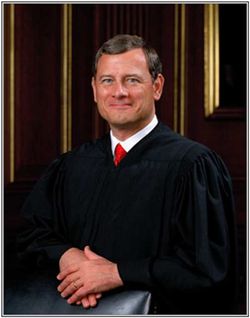 The Republicans in DC are talking into every mike available about how clever the ruling was, and that Obama’s goose is now really cooked because the court finally confirmed that he’s been lying all along about the individual mandate not being a tax. BFD! The sumbich can’t open his mouth without lying, and his growing list of lies fills file boxes. Most of the electorate out there still believes that Obama’s got a mysterious, never-ending “stash” from which they will continue to get more out than they put in until the cows come home.
Respected blogs like The Blaze prattle with hopeful pieces titled ‘Five Reasons Why the Obamacare Decision might not be as bad as you think.’ Well, they continue to miss the big reason why the decision was a disaster for all Americans who understand the history and the present of government overreach. (My own inadequate attempt at this was ‘SCOTUS backs Obamacare’ and its comment stream.)
The argument that Chief Justice Roberts closed the door on the notorious Commerce Clause of the 14th Amendment is specious. The ruling did no such thing. Congress can continue to make all kinds of restrictive laws citing the Commerce Clause just like they have always done. That door was not closed by SCOTUS.
But what really happened, which people on the Right seem to not see, is that a new and bigger gate to government overreach has been identified, designed, crafted, and opened by John Roberts. Now Congress has the additional Supreme Court invited power to mandate any behavior they wish to extract from individual citizens through private enterprises to public institutions. All they have to do is to specify what they want us to do, buy, sell, trade, declare, surrender, … , and tell us how big of a check we have to send to the IRS should we refuse to do so. And woe be to us if we don’t pay our punishment fines, … er, constitutionally permitted taxes.
Obama’s nudge expert Cass Sunstein must be rolling on the rug laughing. Everything that this socialist has hoped for in government’s ability to coerce and corral behavior is now law of the land. The new and glorious gate has been opened, and Roberts has had the good grace to write Congress the owner’s manual on how to properly go through it every time they deem that a new stricture is required to make us behave better.
For the record, liberty lost.
[2jul12 update] For a while there I was beginning to think that no one else really understood the real catastrophe that the Roberts Ruling has loosened on the nation. It felt lonely, and I began to re-examine my reasoning on the matter, since even Charles Krauthammer (‘The Bonze’) gave no evidence that he saw what sure seemed obvious to me. Fortunately, over the weekend some established heavyweights on the national commentary scene weighed in, and now I consider myself to be a member of a small and, hopefully, growing minority. (What the hell, I never was any good at joining all those consensus clatches.)
John Yoo, UC Berkeley Law School professor, said, “Some conservatives see a silver lining in the ObamaCare ruling. But it’s exactly the big-government disaster it appears to be.”, and then writes in ‘Chief Justice Roberts and His Apologists’ –
Worse still, Justice Roberts’s opinion provides a constitutional road map for architects of the next great expansion of the welfare state. Congress may not be able to directly force us to buy electric cars, eat organic kale, or replace oil heaters with solar panels. But if it enforces the mandates with a financial penalty then suddenly, thanks to Justice Roberts’s tortured reasoning in Sebelius, the mandate is transformed into a constitutional exercise of Congress’s power to tax.
In ‘A Vast New Taxing Power’ (2jul12 WSJ online edition) we read that
… the punishments in the tax code for inactivity come in the form of not being able to claim benefits that Congress in its graces bestows. Such as: If you don’t borrow to buy a home, you don’t get a mortgage interest deduction.
Congress has never passed a tax on a lack of gasoline or a tax on a failure to buy gasoline, any more than Congress can regulate inactivity under the Commerce Clause by telling people to buy gasoline or else pay a penalty. The reality is that Washington would love to regulate the ordinary economic choices that used to be beyond its purview, and now it will be able to abuse the ad hoc “tax” permit that the Chief Justice has given it.
And Holman W. Jenkins Jr opines in the 1jul12 WSJ that Chief Justice Roberts’ ruling in favor or Obamacare was even
Worse, (that) in doing so, he may have read any constitutional limit on Congress out of the Constitution while pretending to do the opposite. Congress cannot compel you to do anything Congress wishes, but it can impose taxes on you until you finally have no rational alternative but to do whatever Congress wishes.

 rebanesruminations.com
Leave a comment