

George Rebane
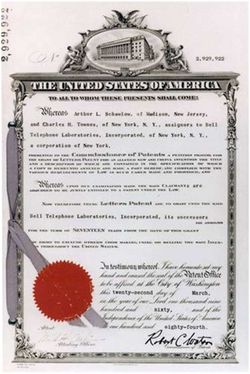 President Obama’s program to ‘Win the Future’ includes patent reform. The current system implemented by the Patents and Trademarks Office (PTO) awards a patent on the basis of who can demonstrate that he invented it first, regardless of who first filed a patent application for the gizmo. Obama claims that it will create more jobs and win the future (whatever the hell that means) if we change the system to ‘them that files first gets the patent’. That is supposed to help the entrepreneur and generate more desperately needed jobs.
Well, it turns out that it’s not that easy of a call. I hold a number of patents and have started companies based on intellectual property (IP), the fancy word for protected know-how that launches lots of job-creating small businesses. One of the things about the American business environment that has kept us on the leading and bleeding edge of developing and commercializing new ideas is that if you think of it first and can prove it, then you have something solid to bet on or take to the bank. At a later time you can file for a formal patent when you are ready to introduce the idea to the public. But before then, you can spend time talking to people and noodling out your biz plan before you lay out the big bucks.
It costs a minimum of about $10K to $15K to file a patent today, and much more for patents on complex stuff like a new drug. That’s not chump change to most people, especially if it involves quitting their day job to pursue their dream. And it’s not something you want to write a check for every time you have a hot flash – after all, it might just be the onset of menopause. So what most entrepreneurs do is write up the great idea, date it and seal it in an envelope, and file it with their patent attorney. Then the inventor can work on building a prototype or spending money to figure out 1) whether the damn thing works, and 2) whether it can be the basis for a business. First things first.
If it does look promising, you can take the next step and, perhaps, file a less costly provisional patent application. This gives you a year to scratch your behind and get more comfortable with the decision to spend the big bucks. You know that you have your provable invention date to protect you in case someone with a bigger wallet beats you to the PTO with a full blown application.
The argument on the other side is that evennwhen an inventor (or his company) does file with the PTO and gets a patent issued a couple or more years later, then it may still be uncertain that the IP is really protected. Someone may later come out of the woodwork after seeing the patent in the public domain, and demonstrate that his hot flash occurred much earlier than that of the new patent holder. This, according to the administration’s mavens, is supposed hold back investors that keep the company from launching and creating all those new jobs. (Never mind that no one on Obama’s A Team has ever started a company and/or met payroll.)
Now there may be a point somewhere in there, but I have not experienced it myself. Nor have my customers had such problems when I was a high tech consultant to both big and small companies. The downside of adopting the ‘first to file’ rule is that it will tilt the playing field in favor of the fat wallets for whom the filing fees are chump change. Big companies make a habit of spraying applications at the PTO on anything and everything their employees can think of, especially if it involves protecting an existing product line.
First to file discourages the small guy who comes up with a great improvement to Goliath Inc’s billion dollar product. He thinks of either licensing his great idea to Goliath, or launching a David start-up to compete with Goliath. If he’s experienced, he knows that he’s facing some pretty stiff winds. Unless he’s got his IP protected by documentation of primacy AND a strong patent, preferably issued, he doesn’t have a chance. And even if he had the patent, the chances are that he will still be ripped off by Goliath. There are many ways Goliath can keep David from the market, and their counter-attack always involves the secret ingredient LAWYER, that staple of business friction. I still have the arrow holes in my back to attest to this kind of chicanery.
Technology is accelerating, as these pages have recorded over the years, and the PTO is deluged with applications with which it can hardly keep up. But the current system has worked remarkably well for over a century in the world’s leading technology country. There are literally dozens of other things that government can do to foster new business start-ups which do not involve changing something that works. And most of these improvements involve government getting out of the way of the entrepreneur with and idea and the investors who want a turn at getting the golden ring. Changing the rules to favor established businesses over the small guy in acquiring and/or defending intellectual property does not make it easier for the next Thomas Edison or Jeff Hawkins to start businesses that change our lives for the better. (more here, H/T to RR reader)


Leave a Reply