
Rebane's Ruminations
March 2011
S M T W T F S
 12345
6789101112
13141516171819
20212223242526
2728293031  

ARCHIVES


OUR LINKS


YubaNet
White House Blog
Watts Up With That?
The Union
Sierra Thread
RL “Bob” Crabb
Barry Pruett Blog

George Rebane

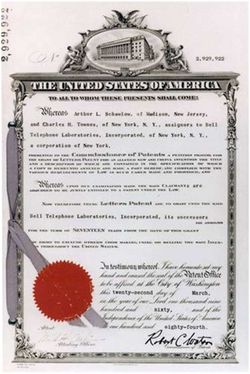
LetterPatent President Obama’s program to ‘Win the Future’ includes patent reform.  The current system implemented by the Patents and Trademarks Office (PTO) awards a patent on the basis of who can demonstrate that he invented it first, regardless of who first filed a patent application for the gizmo.  Obama claims that it will create more jobs and win the future (whatever the hell that means) if we change the system to ‘them that files first gets the patent’.  That is supposed to help the entrepreneur and generate more desperately needed jobs.

Well, it turns out that it’s not that easy of a call.  I hold a number of patents and have started companies based on intellectual property (IP), the fancy word for protected know-how that launches lots of job-creating small businesses.  One of the things about the American business environment that has kept us on the leading and bleeding edge of developing and commercializing new ideas is that if you think of it first and can prove it, then you have something solid to bet on or take to the bank.  At a later time you can file for a formal patent when you are ready to introduce the idea to the public.  But before then, you can spend time talking to people and noodling out your biz plan before you lay out the big bucks.

It costs a minimum of about $10K to $15K to file a patent today, and much more for patents on complex stuff like a new drug.  That’s not chump change to most people, especially if it involves quitting their day job to pursue their dream.  And it’s not something you want to write a check for every time you have a hot flash – after all, it might just be the onset of menopause.  So what most entrepreneurs do is write up the great idea, date it and seal it in an envelope, and file it with their patent attorney.  Then the inventor can work on building a prototype or spending money to figure out 1) whether the damn thing works, and 2) whether it can be the basis for a business.  First things first.


If it does look promising, you can take the next step and, perhaps, file a less costly provisional patent application. This gives you a year to scratch your behind and get more comfortable with the decision to spend the big bucks.  You know that you have your provable invention date to protect you in case someone with a bigger wallet beats you to the PTO with a full blown application.

The argument on the other side is that evennwhen an inventor (or his company) does file with the PTO and gets a patent issued a couple or more years later, then it may still be uncertain that the IP is really protected.  Someone may later come out of the woodwork after seeing the patent in the public domain, and demonstrate that his hot flash occurred much earlier than that of the new patent holder.  This, according to the administration’s mavens, is supposed hold back investors that keep the company from launching and creating all those new jobs.  (Never mind that no one on Obama’s A Team has ever started a company and/or met payroll.)

Now there may be a point somewhere in there, but I have not experienced it myself.  Nor have my customers had such problems when I was a high tech consultant to both big and small companies.  The downside of adopting the ‘first to file’ rule is that it will tilt the playing field in favor of the fat wallets for whom the filing fees are chump change.  Big companies make a habit of spraying applications at the PTO on anything and everything their employees can think of, especially if it involves protecting an existing product line. 

First to file discourages the small guy who comes up with a great improvement to Goliath Inc’s billion dollar product.  He thinks of either licensing his great idea to Goliath, or launching a David start-up to compete with Goliath.  If he’s experienced, he knows that he’s facing some pretty stiff winds.  Unless he’s got his IP protected by documentation of primacy AND a strong patent, preferably issued, he doesn’t have a chance.  And even if he had the patent, the chances are that he will still be ripped off by Goliath.  There are many ways Goliath can keep David from the market, and their counter-attack always involves the secret ingredient LAWYER, that staple of business friction.  I still have the arrow holes in my back to attest to this kind of chicanery.

Technology is accelerating, as these pages have recorded over the years, and the PTO is deluged with applications with which it can hardly keep up.  But the current system has worked remarkably well for over a century in the world’s leading technology country.  There are literally dozens of other things that government can do to foster new business start-ups which do not involve changing something that works.  And most of these improvements involve government getting out of the way of the entrepreneur with and idea and the investors who want a turn at getting the golden ring.  Changing the rules to favor established businesses over the small guy in acquiring and/or defending intellectual property does not make it easier for the next Thomas Edison or Jeff Hawkins to start businesses that change our lives for the better.  (more here, H/T to RR reader)

Posted in ,

2 responses to “Patently Problematic”

  1. D. King Avatar
    D. King

    George,
    Thanks for posting this.
    Most people don’t understand the process and the implications of these changes. Inventions do not come from government, they come from people. These policy decisions are being made by an unholy cabal of crony capitalists and the Social Justus redistributionist’s. This will stifle innovation by the small inventor. Remember, Apple computers started in a garage by two guys, not a major corporation. If one has resigned themselves to always work for someone else, then these changes will not matter much in the short term, however, long term, they will kill U.S. innovation.
    All these changes are being made to bring us in line with the vacuous E.U. IP mindset. They have given up on energy innovation and therefore must control its use, whether for control, or the fake climate crises, it matters little. Ex: light bulb ban. Their lack of understanding of the science of energy could fill volumes. These victims of lunch money theft now have a Napoleon complex. When you’re describing the dimensions and content of a sausage as part of your job, something is wrong. Anyway, I hope Tom McClintock does not fall for this more than obvious internal / external attempt to takeover of the U.S. Patent Office.
    Here is my take on the changes
    . Death of the U.S. Entrepreneur
    The Patent Reform Act of 2011
    http://leahy.senate.gov/press/press_releases/release/?id=74cbf540-cc98-4172-b719-8d630e6bdf78
    The Patent Reform Act will keep America in its longstanding position at the pinnacle of innovation. The U.S. patent system has not been updated significantly in nearly 60 years. In the intervening years, our economy has changed dramatically. A well functioning and efficient patent system is critical to American invention and innovation, which are the cornerstones of our economy and job creation. The bipartisan legislation makes the following changes:
    • The Act transitions the U.S. to a first-inventor-to-file system, which will simplify the application system and harmonize it with our trading partners, reduce costs, and improve the competitiveness of American inventors seeking protection globally.
    From “First to invent to First to publish” Means someone other than the inventor may be granted the patent. This cuts out any benefits to the inventor.
    Additionally, it opens the system up to the corruption of patent filling firms.
    • The Act makes important changes to improve patent quality. First, the Act establishes the opportunity for third parties to submit information (e.g., prior art) related to a pending application for consideration by a patent examiner. Patent examination is ex parte, with no participation by those who may have the best knowledge of the prior art. By allowing prior art to be submitted and explained, patent examiners will have a valuable tool to use to grant only high quality patents. Second, the Act creates a “first window” post-grant opposition proceeding, open for nine months after the grant of a patent, which allows challengers to weed out patents that should not have issued. High quality patents provide more certainty to both inventors and users of inventions.
    “…allows challengers to weed out patents that should not have issued.” Translation: Allows corporations and people with money to steal patents by writing
    higher quality submissions again cutting out the actual inventor from profit.
    • The Act improves the current system for administratively challenging the validity of a patent at the PTO throughout the life of the patent. Under current law, anyone can challenge a patent administratively through an inter partes reexamination proceeding at the PTO on the basis of patents or printed publications. While these challenges are easy to institute, they take more than three years on average to complete, even prior to appeals to the Federal Circuit. The inefficiency of the system is bad for challengers who have meritorious challenges but cannot get a final decision from the PTO, and is bad for patent owners who can have their patents tied-up in review for years even if the challenge is not ultimately going to be successful. The Act improves the system in four key ways:

    “The Act improves the current system for administratively challenging the validity of a patent at the PTO throughout the life of the patent.”
    The inventor might as well rent a room at the court house, because tag team challenges can keep him in court for the duration of the patent.

    First, the Act creates a more meaningful alternative to litigation by establishing an adversarial inter partes review, conducted by Administrative Patent Judges, which contains procedural changes that will allow the PTO to complete most reviews within 12 months. The challenge will be heard by a panel of three Administrative Patent Judges, and its decision is appealable directly to the Federal Circuit. Second, the proceeding will include a threshold for instituting a proceeding. The challenger must show a “reasonable likelihood” that it would prevail in invalidating a claim of the patent. Third, the proceeding will include new, procedural safeguards to prevent a challenger from using IPR to harass patent owners. Fourth, the Act includes a “reasonably could have raised” estoppel standard, preventing a challenger from raising in court only an argument that reasonably could have been raised during an inter partes review that the challenger instituted.

    “First, the Act creates a more meaningful alternative to litigation by establishing an adversarial inter partes review,”
    Translation: Patents can be stolen without having to go to court

    • The Act will provide more certainty in damages calculations and enhanced damages. Specifically, the Act includes a rigorous gate keeping role for the court, pursuant to which judges will assess the legal basis for the specific damages theories and jury instructions sought by the parties. The gate keeping provisions will ensure consistency, uniformity, and fairness in the way that courts administer patent damages law. The Act also permits a party to request, and requires a court to grant absent good cause, that the trial be sequenced such that the trier of fact decides questions of validity and infringement prior to damages.
    In addition, the Act improves the law of willfulness and enhanced damages. It codifies the case law that holds that a defendant may only be found to have willfully infringed a patent if the plaintiff demonstrates by clear and convincing evidence that the infringer acted with objective recklessness and the objectively-defined risk was either known or so obvious that it should have been known by the infringer. The Act also requires that allegations of willfulness be pled with particularity, limits the use of vague pre-suit notifications, prohibits mere knowledge of a patent from being the basis of a willfulness finding, and does not allow the failure to obtain advice of counsel to be used to show willfulness or inducement. Finally, the court may not enhance damages if it determines that there was a close case as to validity, infringement, or enforceability, even if a trier of fact finds the infringer acted willfully.
    If the inventors patent is found to be infringed upon, the fines for infringement are less.
    • The Act creates a supplemental examination process to incentivize patent owners to commercialize their inventions despite potential flaws in the application process.

    “…incentivize patent owners…” Hey Rocko…incentivize him!
    Having trouble finding funding to manufacture products based on your patent….You’re screwed!

    • The Act will prevent patents from being issued on claims for tax strategies.
    • The Act provides fee setting authority for the PTO Director to ensure the PTO is properly funded and can reduce the backlog of patent applications, but mandates a reduction of fees by 50% for small entities and 75% for micro-entities.

    Bureaucrats will now control the fees for a patent….not the congress.

    The agreement also retains additional provisions from last year’s legislation, including (1) the compromise on venue; (2) amendments to best mode; (3) increased incentives for government laboratories to commercialize inventions; (4) restrictions on false marking claims; and (5) removal of the restrictions on the residency of Federal Circuit judges.

    Below is a list of co-conspirators.

    The Patent Reform Act of 2011 is nearly identical to the Managers’ Amendment from last Congress, which has support from: The United Steelworkers, the AFL-CIO, The Coalition for 21st Century Patent Reform, National Association of Manufacturers (NAM), PhRMA, BIO, National Venture Capital Association, the American Intellectual Property Law Association (AIPLA), Intellectual Property Owners Association (IPO), the American Bar Association (ABA) Section on Intellectual Property, AdvaMed, the Association of American Universities, American Council on Education, Association of American Medical Colleges, Association of Public and Land-Grant Universities, Association of University Technology Managers, the Council on Government Relations, 3M, Bose Corp., Boston Scientific, Cargill, Caterpillar, the Dow Chemical Company, Ecolab, Exxon Mobil, General Electric, Genentech, IBM, Johnson & Johnson, Kodak, Medtronic, Microsoft, Monsanto, Motorola, Novartis, PepsiCo, Pfizer, Procter & Gamble, Zimmer, the President of Yale University and former co-Chair of the relevant National Academies of Sciences Committee, the California Healthcare Institute, the University of California, and the Wisconsin Alumni Research Foundation (WARF)

    Like

  2. Discount Coach Bags Avatar

    You may believe these four proverbs:
    Whom the gods destroy, they first make mad.
    Life is a leaf of paper white, thereon each of us may write his word or two.
    On earth there is nothing great but man; in the man there is nothing great but mind.
    Everything ought to be beautiful in a human being: face, and dress, and soul, and ideas.

    Like

Leave a comment