

George Rebane
Another quiet revolution is taking place that will impact all of our lives in ways known and unknown. Its big name is additive manufacturing (AM), but we used to know it as 3D printing. Stereolithography, the technology behind AM and 3D printers, was first invented by Charles Hull in 1984. These printers take in a CAD (computer aided design) file that describes a part or gizmo, then it computationally decomposes the object into layers like individual slices of your head in an MRI scan, and finally lays down, layer by layer, each of its various materials until the entire thing is built. (more here)
And these things are not just simple pieces like a vase or toy truck. Today people have printed complex objects such as a copy of a Stradivarius violin and a pendulum clock. The violin plays beautifully, and the clock ticks and tells time. But even these feats are not the punch line of the game changing story in how things will be made – a process we usually call manufacturing.
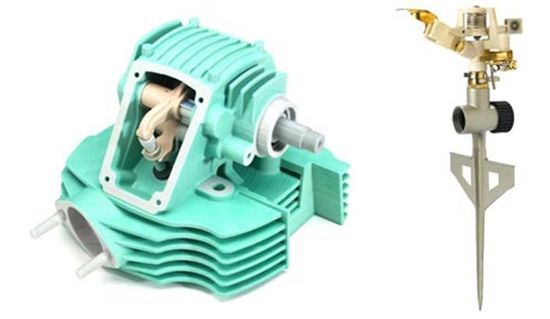
The game changer is that 3D printer prices have plunged – you can buy one for under $5K – and their ability to quickly print precision pieces out of an increasingly large inventory of materials has grown. AM used to be reserved for high end developers, and laboratories making prototypes and one-offs. It still is, but their rapid cost reductions are now making such printers affordable for every engineering office and job shop that makes everything from new product designs to specialized replacement pieces to short manufacturing runs for testing market acceptance of a new product.
These advances in AM promise to unleash a wave of creativity and entrepreneurship all over the world. Years ago, my brother-in-law and I invented a machine that sorted knives, forks, and spoons in a commercial kitchen. Typical of young entrepreneurs, we had day jobs, raised our families with small kids, and worked evenings in the garage building our gizmo. The thing required a number of unique parts ranging from PVC extrusions to various pieces of bent metal in odd shapes. Because of the expenses involved, we agonized long and hard before committing to a design that had to be specially fabricated for us or cobbled together in the garage. The working prototype took over two years to develop before we could demonstrate it to potential licensees.
With today’s technology using AM, we could have tested various designs and built a better and cheaper prototype in about one month. Now multiply that by about a hundred thousand garage shops around the world pumping out new things every month or so. At this point some of you are asking, well what happens to all the pattern makers, the tool & die makers, the numerically controlled mill operators, the assemblers, … . And therein lies our tale.
Companies are now building AM devices that can make large and complex pieces of cars and trucks, and in the plans are even bigger ‘printers’ that can fabricate an entire airplane wing from its CAD file. Whole layers of human prototyping and manufacturing labor consisting of highly skilled workers will be replaced by these machines. Soon manufactories will require people only on the technically creative and management end, and those to move parts around and sweep the floors. And given how expensive government has made hiring workers, the parts movers and floor sweepers will also be replaced by machines sooner than later.
What I’m returning to here is the topic that no one wants to talk about. In the past, when technology displaced workers, more technology created new and accessible jobs that didn’t exist before. This workplace evolution has gone on for about two hundred years now, and the nearsighted believe that the same thing will continue in the 21st century. But that is a disastrous error in the making.
Most of us (at least regular RR readers) are aware that in recent years America and the developed world have been experiencing productivity gains without the net creation of new high-paying jobs. As an experiment, how many new private sector job classifications can you name that have come on the market recently? The only new jobs that are available to the ‘average worker’ are low-paying service jobs and friction creating government positions to monitor, corral, and control other wealth producing citizens. But as this recession shows, both of these categories are problematic and promise short, uncertain careers.
To our social engineers, the solution is mandated unions and/or an empty education delivered wholesale wherein we hang worthless diplomas around the necks of ‘students’ who learned nothing sellable while they populated our colleges and universities. Andy Kessler recently wrote ‘Is Your Job an Endangered Species?’ that laid it out straight – Technology is eating jobs, and not just obvious ones like toll takers and phone operators. Lawyers and doctors are at risk as well. It’s a thoughtful read.
In the meantime, most of us will ignore all of this along with what’s happening today in Wisconsin. There the public service union members in Madison are screaming their rage at their governor for his promised attempt to bring these rent seekers to heel. But in reality they are just the ignorant consumers of unsustainable promises made to them by their equally rent seeking political shills. The moon they should be baying at is what I have described here and elsewhere.


 rebanesruminations.com
Leave a comment