

George Rebane
My career as a markets watcher and investor goes back to 1970 when I started tracking stocks and mutual funds along with my aerospace company engineering peers. We heard the pundits, analysts, and economists make their sage assessments and predictions, and pooled our resources to subscribe to some pricey financial and investment newsletters. What we also studied very closely were the prognostications that these gentlemen issued to earn their daily bread and public adulation.
Being of a quantitative and analytical bent, we started paying attention to the high priced predictions we received through the mail, in newspapers, and on TV. A little research quickly showed that these guys didn’t have a clue about what they were talking. It was all blather. Yet, then as now, the media audiences kept lapping it up, and the government agencies kept quoting their wisdom in support of whatever policies and/or regulations they were trying to foist. The bottom line we discovered was that it was bad for your bottom line if you acted on what the stuffed shirts spouted.
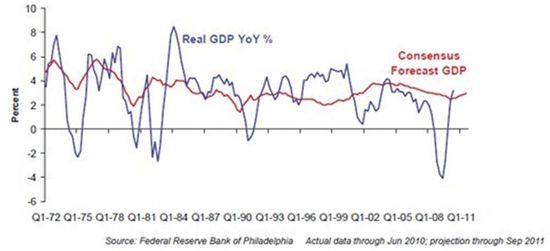
But what galled us most was that they got to keep their jobs with whatever university, agency, or bureau they were with after constantly making such horrendous errors in their work product. As engineers, any of us screwing up just once and half as badly would have been shown the door. And back in those days such mistakes would have followed you to your next job interview. As a result many unfortunate engineers gave up engineering, got their teaching credential, and became classroom teachers.
Today nothing much has changed in and about economics, and if truth be told, it has gotten worse. The economists as a group even deny the technical advances made in extracting the ‘wisdom of the crowd’. As a crowd, these guys/gals are all over the map and, in the aggregate, they are doubly dumb. RR readers have been subjected to my pretty heartless assessments of their professionalism and performance. But since they continue to be cited as sources of some privileged knowledge about the future of economies, I will have to do my part and continue reminding people that on the whole they are charlatans. As always, there have been and continue to be exceptions – economists who know the enormity of the complex systems whose workings they attempt to understand and communicate.
In the current screed I will also include a few words from a recent piece written by James Montier, former co-head of global strategies at Societe Generale.
“However, attempting to invest on the back of economic forecasts is an exercise in extreme folly, even in normal times. Economists are probably the one group who make astrologers look like professionals when it comes to telling the future. Even a cursory glance at (the chart above) reveals that economists are simply useless when it comes to forecasting. They have missed every recession in the last four decades! And it isn’t just growth that economists can’t forecast: it’s also inflation, bond yields, and pretty much everything else.” (Original emphasis.)
So, dear reader, as we enter this whirlwind year of fiscal fiascoes, fallacies, and failures, keep in mind the record of this profession. And in their name, be especially aware of the economic nostrums and predictions that issue from commissions and agencies whose fundamental objective is to keep you in the dark and unprepared.

 rebanesruminations.com
Leave a comment