

George Rebane
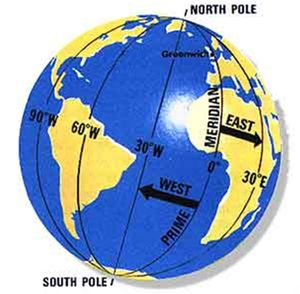 We recently watched the somewhat flawed A&E production of ‘Longitude’, the story of John Harrison’s invention of the marine chronometer in 18th century England. In the early 1700s global trade and commerce were exploding along with European conquests of newly discovered lands. The big problem at the time was that it was not possible to accurately determine one’s east/west position or longitude on the globe (north/south or latitude was fairly easy to measure). Because of this, ships, crews, and valuable cargoes were lost, and cross ocean voyages took much longer.
The safest way was called ‘parallel latitude’ sailing in which you picked a safe and feasible latitude to go across the ocean, and then sailed to that latitude while keeping land in sight before heading directly east or west across the ocean. When you got to the other side, you again sailed along the coast until you came to your destination. This method did not permit sailing the shortest distance from point A to point B along the so-called great circle route which connects the two. For that you needed to know your longitude while under way, and for that you needed a very accurate clock. Enter John Harrison (1693-1776) and the Longitude Prize (of about $2.5 million today), and the British government’s Board of Longitude (BoL) that would adjudicate the competition to develop a practical method of obtaining longitude and award the prize.
The invention and adoption of a working marine chronometer was an extremely important objective for Great Britain, as it became the world’s leading maritime nation. Its use had a direct bearing on success in war and success in commerce. Yet it turned out that the BoL through bureaucratic bungling and petty disputes kept jacking Harrison around for almost fifty years before it finally acknowledged that the man had cracked the code on longitude decades before. The BoL never did give its imprimatur and award the prize to Harrison or anyone else. Instead it kept Harrison on the hook through small piecemeal stipends to make clock after clock that it found new reasons not to accept. Meanwhile, ships and men wound up on the rocks.
But the lesson that was again highlighted for us as we watched the A&E DVD, was what happens when you get government involved in the development or administration of literally any enterprise one can think of. (BTW, don’t bother watching the DVD, you can read more interesting and accurate histories of the affair in much less time.) We started recalling how governments were injected into various commercial and military developments, and the common denominator of incompetence and inefficiency raised its head in every case. And conversely, when government was not able to intervene early and often, then the result was success and widespread adoption sooner than later.
Very few are the exceptions, and only those projects where enormous amounts of money were needed and no immediate commercial benefit was to be expected. That is, the real benefit came from entrepreneurs who later picked out pieces and built businesses that would make a market for versions that no bureaucrat ever dreamt of (I think they immediately amputate the dream thingy from new bureaucrats so they can perform true to form.)
Governments, when they subsequently involve themselves, also serve to slow down further innovation. That comes about when the corrupt dirtbags are successfully lobbied by the first-in capitalists to create new laws and regulations that prevent more efficient and innovative competitive businesses from succeeding. Examples are legion, but the Ma Bell telephone history comes to mind. An even more humor-through-tears history attends America’s development of the airplane for military and commercial uses. Government stood in the way at every turn, and it had to be in response to our enemies that we finally became world leaders in the aircraft industry during the second half of the last century in spite of the fact that it was Wilbur and Orville who first flew in 1903.
Today we can say that every additional bureau, commission, board, … the government creates is another net impediment to how we conduct our lives, manage our property, and exercise our liberties. Bureaucratic inflation went on steroids in the 1930s with FDR’s New Deal, it expanded ever more with Lyndon’s Great Society in the 1960s, and today it has gone ballistic beyond imagination with Obama’s Fundamental Transformation to Socialism. In his first 18 months he has done more damage to the Republic than anyone could conceive. Today more than half of Americans are ready to accept that all monies earned belong first to the government (i.e. and eventually to them), and it should be the government, at its pleasure, that determines who gets to keep how much of what. Property ownership has already been turned on its head – remember, you own something only to the extent that you can dispose of it as you wish. Bastiat’s Triangle predicts the result to our liberties, and those sadly are disappearing in lockstep with our property and security.


 rebanesruminations.com
Leave a comment