

George Rebane
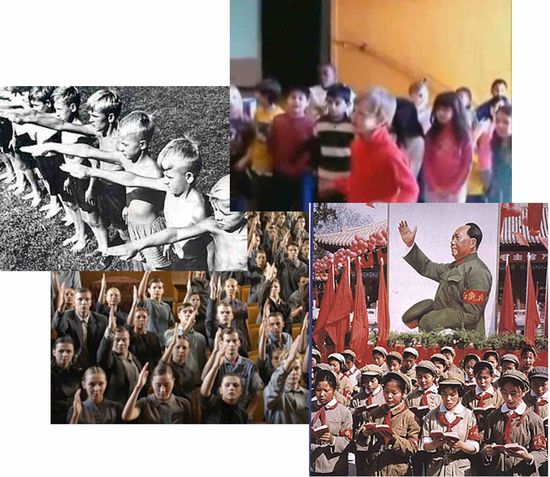
RR reader, critic, and contributor Steven Frisch has a well developed and worthy of debate world view. He posted a comment to some statements I made here regarding the history of death by government and, by implication, its portents for America. Steve took my brief explication of 20th century state sponsored/executed mass murders to task, concluding with –
Murder is murder, by anyone, in anyone’s name, in the service of any ideology, regardless of the perceived threat from opposing views. I guess I wonder why someone would contend that Hitler was a third rate killer? Why would it matter to you to point out that Stalin or Mao killed more? Does it diminish in some way the evil of Hitler? Why compare? I am not sure that a moral economy of scale exists in murder.
Murder is the unlawful taking of human life, and knowing the history of mass murders carried out by the organs and institutions of state is important. It is important to know the several such murderous destinations and the many paths which have led to them. But most important of all is to recognize early and identify reliably the common element or idea that launched nations on such journeys of death.
“… why would someone contend that Hitler was a third rate killer?” Because he was, and mass murderers and mass murders are the more horrible the more ‘massive’ they are. We organize societies in recognition of this truth. Given fixed resources which could save either a million lives or ten million lives, to which effort would we apply them? With one bullet left, who would not aim at the maniac ready to kill ten rather than the shooter able to kill only one? It would be immoral to countenance preventable death, and the more so as the number of preventable deaths is ignored in our decision.
“Why would it matter to you to point out that Stalin or Mao killed more? Does it diminish in some way the evil of Hitler?” Pointing out the magnitude of Stalin’s and Mao’s crimes relative to Hitler’s does matter. And yes, in a relative sense, it does diminish Hitler’s atrocities. But the heart of the matter is what drove each national leader to those acts of mass murder on scales that stagger our understanding. Acquiring this knowledge is critical to informing our future.
Each murderer knew precisely what he was doing, and each was more than willing to explicate the basis for his actions. Each of these (and other lesser) murderers was driven by a similar, nay, identical ideology. Each claimed that the deaths were justified and necessary in order to achieve an elevated order of man on this planet. The killing of the undesirables was a necessity on the path to a more noble and pure collective of survivors.
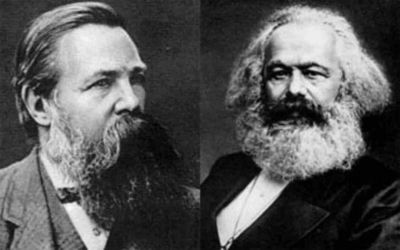
Every one of these killers was a devotee of socialism and student of the 19th century political philosophers Karl Marx and Frederick Engels. Their individual versions and methods differed but slightly, but their ‘results’ – levels of death and wholesale misery – differed greatly. All of them believed that humans could achieve their highest potential within the collective, and anything standing in the way of such a cohesive collective should be and was summarily liquidated.
The path to such a glorious future became clear to several national groups in the late 19th century. The United States then became, perhaps, the leading hotbed of socialism cum communism with the advent of the new liberals, or progressives, as they liked to call themselves. Led by colorful and dynamic populist leaders like Teddy Roosevelt, they collected the political and social wisdom of contemporary mentors like Herbert Croly, Richard Ely, John Dewey, and Justice Oliver Wendell Holmes (each worth googling) into what would emerge as the Wilsonian dream at the end of WW1. And with support of publicists like playright/author George Bernard Shaw, the American infection took hold, procreated, and is alive and well today.
The Great Depression was a crisis not to be wasted, and it gave FDR an unprecedented opportunity to implement the programs that launched America’s nascent version of socialism, all collected into what he called the New Deal. It was a beginning that played well against the propaganda ‘news’ reels from the USSR then shown in movie theaters across the land. Talk about putting on national blinders.
While Stalin was killing tens of millions by state executed starvation, Americans watched dancing peasants on collective farms, factory workers singing with steel furnaces in the background, and massive outflows from the turbines of newly built hydroelectric dams. We were told that everyone had a job, everyone had healthcare, everyone could not be happier as they drew from the state according to their needs, and gave back according to their abilities.
“I am not sure that a moral economy of scale exists in murder.” And that, dear reader, is the whole point of studying the relative efficiencies of mass murder and the ideological mandates that motivated them. Different socialistic schemas could and would implement economies of scale in murder, and because of that each would be the greater danger to those not yet caught up in the terrible whirlwind.
American progressives and Russian Bolsheviks talked early of gas chambers as a tool for shaping society. It was Hitler who ‘perfected’ their application. But before Hitler, Stalin had already discovered more efficient means of killing entire populations that stood in his way. Militarily enforced starvation during peacetime would and did kill people at the rate of 25,000 per day and back-to-back years with annual totals of ten million. Hitler took six years to kill six million while having to conduct a world war.
Mao brought the moral and numerical economies of scale to their highest level yet. During the two separate years-long mega-atrocities known as the Great Leap Forward (1958-60) and the Cultural Revolution (1966-76) he combined work and starvation to kill at yet to be achieved rates. The conservative total is acknowledged between 70 and 100 million. The Chinese who survived and can now tally up the dead put the total north of 130 million. Today it is politically incorrect to bring up these sums to our dearest creditor.
Yes, it is indeed morally more reprehensive to kill a greater number than a smaller number of people. And when the differences between the killing machines is in the tens of millions, it becomes a moral imperative not only to adjudicate them by magnitude, but also to study the greater ones in order to understand how they came to be so that we can avoid them. Only the historically naïve see mild forms of socialism as stable ways to organize societies. History shows that socialism is at best a speed bump on the road to totalitarian communism.
In the end we should disabuse ourselves of the notion that Hitler and cohorts put in place a rightwing extremist social order. They were nothing but socialists derived from the same root as all the other forms. They called themselves national socialists from which we derive Nazi. The Bolsheviks Lenin and Stalin, along with Mao, had bigger plans and correctly identified themselves as international socialists.
Since the fall of the Wall their dream is alive and well. It has now been repackaged in our public education curricula and displayed daily on the totems of our daily life that range from billboards to T-shirts and bathing suits. Vehement denials by progressives of their socialistic coloring or goals are the expected constant on our mainstream media. The camouflage is completed when the same progressives now consider being called a socialist akin to “name calling”. Yet when talking among their own, they openly celebrate the legacy of Marx and Engels and their students Stalin, Mao, Che, Castro, … .
I don’t delude myself that this little summary is the final word on the topic. Most (all?) of this is rejected by the rank and file who would identify themselves as progressives and support the current direction that our country’s leadership is taking us. But it may yet serve a useful purpose if any such progressives remember these facts and get a hint of what’s ahead while they energetically work to better the lot of the common man.
While there is much overlap, morality is still culture specific. In the Christian based culture of America and its secular humanist variants, I believe our society demands that the original thesis be reversed. It is for us immoral to equate political killings large and small. It is immoral for us to equate the singleton killer with a mass murderer, especially if that murderer has delivered death in the greater economy of scale. It is immoral for us to wipe from our history any incidence of wholesale death – one sample cannot speak for the rest. We can and must rank and rate historical killers that can serve as potential exemplars for today’s leaders who also seek to create new world orders.


 rebanesruminations.com
Leave a comment