

George Rebane
- dedicated ereaders not long for this world
- flexed muscles control computers for the masses
- Top ten scientific breakthroughs for 2009
- Some major technology themes for 2010
The dedicated ereader’s demise is coming on schedule. Ray Kurzweil, rich genius and tech inventor extraordinaire, is unveiling his platform independent Blio ebook software at the annual Consumer Electronics Show this week in Las Vegas. Regular RR readers are aware that I was an early rejector of the dedicated ereaders like Kindle, Nook, etc. They add to your on-the-road gizmo count and provide considerably less functionality than a modern slim (and getting slimmer) laptop or notebook computer. I predicted it would just be a matter of time until some entrepreneur would come up with ebook software that would blow these interim ereader gadgets out of the water. He is come.
To hedge their bets, both Amazon and Barnes&Noble are also providing ereader software that will let you read ebooks on your desktop box or laptop. But they are simply functional lookalikes of what is offered on their tablet readers.
We’ll see what happens when Blio is introduced later this year. And meanwhile, we will see Apple throw its iSlate tablet into the already busy ereader market. In spite of all these dire warnings, my hat is off to these pioneering companies (Amazon, et al) for introducing platforms that have finally launched the ebook format into our lives, a format from which we will not return.
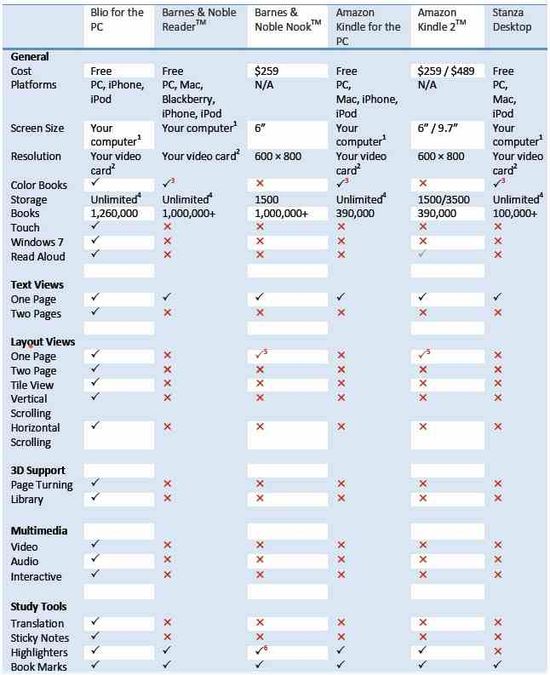
Wired does a nice write-up of Blio (here) from which the following comparison table is lifted.
Controlling computers by flexing your muscles has been coming along in research labs for some time now. Initial versions of the technology were developed for amputees who used various body muscles to control the computers which in turn controlled their prostheses. But now Microsoft has developed such controllers for the rest us and is filing patents to cover their uses for your PCs and game boxes (here and more here). It makes me wonder like how long it will be until some of us will want to live in like a fully instrumented cocoon, and like do everything virtually. (Alright, that may have been cheap shot, but many teenagers today are already living in a virtual world through various internet social networking services and new contact software on their cell phones, or should I say mobile devices.) For those of us with many birthdays and/or other disabilities, such controllers will be a boon and a blessing.
Top Ten Scientific Breakthroughs for 2009. Here is Wired’s list for your considerations. As you examine each, please consider the people involved in this work along with requirements to perform such tasks or use this technology in the workplace. (See ‘Jobs, jobs, JOBS’)
Finally, looking to the future, the NYT offers us some technology themes for 2010 that will influence the way we live (here). These range from realtime telemetry of biodata, like diabetics’ blood glucose levels, to sophisticated online analyzers, to the extended use of facile online databanks that are now starting augment our brainbone memories (eg Evernote). How many of us already would be lost without all the stuff that is contained on and accessible through our mobile devices. In our family, our iPhones are constant-contact gizmos, literally no more than ten feet from us 24/7.

 rebanesruminations.com
Leave a comment