

George Rebane
With the recent explosion of mobile intelligent devices, cell phones, PDAs, laptops, netbooks, etc, etc, all speaking wirelessly to each other through various networks (clouds), the airwaves have become very crowded. The electromagnetic (EM) spectrum is pretty much fixed by the design of our universe, so it looked like we were going to hit the wall sooner or later and not to be able to do all the things we’re doing more and more every day with those gizmos.
 About ten or so years ago some clever engineers took a look at how all those wavelengths were being used and discovered that there were plenty of unused time and frequency slots literally going to waste. These valuable assets are called frangible in the sense that an airline seat on specific flight is frangible – once the airplane takes off the ability to utilize that seat for greater profit, whether empty or full, is gone and gone forever. The engineers then concluded that if we could fill all or a goodly part of those empty and frangible slots, we could use the available spectrum to provide more, better, and cheaper service to the people and businesses now dependent on their gizmos.
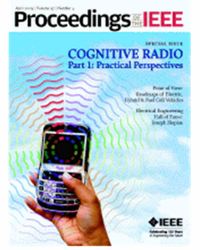
To do this would require a massive change in how the use of the airwaves is regulated (in the US by the Federal Communications Commission) because this is one place where regulatory oversight is needed so that different users don’t bump into each other. But assuming that such regulatory changes would eventually be implemented, research began in earnest on what came to be known as cognitive radio. (The techies may also want to see the April and May 2009 issues of the IEEE Proceedings)
The radio frequency transmissions and receptions would be cognitive in the sense that, in any give area, the transmitters and receiver gizmos would be able to rapidly jump back and forth, and use those fleeting and frangible empty slots of time and frequency. But to do that would require an enormous amount of ‘machine awareness’ and smarts by the devices communicating with each other. The proposed solutions are bringing together most of the disciplines of system science – control and estimation, game theory, signal handling, waveform coding, decision theory, artficial intelligence, optimization theory, machine languages, utility theory, algorithmics, …, you get the picture – and may even require the invention of a new one or two.
What’s the benefit to us? Well, besides more people being able to be on line concurrently, more people could use large bandwidth (video, audio, gaming, …) services more reliably (fewer or no blind/dead spots) and more cheaply. So out of the same natural resource – limited EM spectrum – new wealth would be created. And here’s the punch line of this little diatribe – created by whom?
The purple-haired teeny-bopper, UPS truck driver, bank teller, and liposuctionist will continue using their ever more facile and capable wireless gizmos without even knowing how to spell cognitive radio, let alone realizing that their life is now enhanced by it. The new wealth from such technology developments is created by those who have the smarts, and are willing to take the risks to develop and implement, in this case, cognitive radio services.
Risk to develop? Most people today cannot even think the thoughts required for such a development process. Every techie who ever was, had to make the risky choice to take the harder less traveled road, and learn the formidable disciplines needed for working at and pushing out the frontiers of human knowledge. They did this while surrounded by pressures and tempting peer examples to take the easier roads leading to faster and more secure compensation. And then there are the rare birds (often the techies themselves) who can see the benefit to themselves and society for making a gainful business out of discoveries which, at the time, few can even comprehend.
During the entire process the techies and entrepreneurs know that they are engaged in an eternal competition where the prize often goes only to the first across the finish line, a line which is guarded by legions of lawyers of all stripes representing competitors, entrenched interests, and, of course, government agencies. This in business is known as ‘friction’, and gives rise to the frictional costs which can and have brought many promising enterprises to a dead stop.
In sum, we should think of cognitive radio as just a place holder for the many such gears and wheels that make up the modern engine of an economy. The last century has seen thousands of such advances that today give us the quality of life we enjoy. The great unwashed never realize that these advances have been provided by an ever smaller fraction of the world’s growing population. And with the acceleration of technology in this pre-Singularity era, the fraction of people, especially the young, who are capable of and willing to sacrifice to become members of this elite cohort is shrinking.
Creating wealth and knowledge is hard, especially when new punishments for your success are daily being devised and put into force. Most people never make the connection.
 rebanesruminations.com
Leave a comment