

[A correspondent sent me the following article on carbon footprinting of ethanol production by D.T. Adolphus that was initially published on the Hemmings eWeekly newsletter. With minor format editing for readability, I have decided to post the entire article. It sheds needed light on the important facets of the ethanol issue, and in the process shows how the public is led by the nose to politically motivated but scientifically dubious public policies. gjr]
Ethanol Faces Facts
David Traver Adolphus
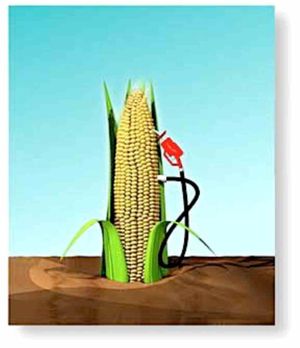 The roots of our ethanol industry are complex, but the EPA’s 2007 Renewable Fuel Standard (1.4MB pdf) has a lot to do with its presence in our gas. RFS required oil companies to develop renewable fuel sources and set minimum standards, which was straightforward enough, but now that President Obama has ordered the EPA to examine the ability of states to establish their own emissions regulations, the game is changing.
At the same time the feds were passing the RFS, California Governor Schwarzenegger created his state’s Low Carbon Energy Standard, which mandates that new fuels, like ethanol and biodiesel, meet specific greenhouse gas standards and include the total lifetime effects of production. At last count, 11 more states were interested in adopting LCES, which would make it a de facto national standard.
The challenge is in a change from the way the already-stressed ethanol industry measures their pollution: LCES “compels the EPA to look at both the direct and indirect effects of ethanol in greenhouse gas emissions,” said Brian Jennings, Executive Vice President of the American Coalition for Ethanol, in Agriculture Online. That means attempting to calculate relevant but nearly intangible effects like an increase in Brazilian slash-and-burn agriculture to offset the reduction in the supply of American corn for food, or change in cattle feedlot outgassing when switching from corn to soy feed.
The result from such equations is far from clear. On one hand, the University of Nebraska published a study (676KB pdf) showing a near 50 percent reduction in greenhouse gases comparing ethanol head-to-head with gasoline; on the other, Timothy D. Searchinger recently wrote in Science that ethanol’s overall greenhouse gas contribution as LCES would measure it is actually greater than that from gasoline:
“Most prior studies have found that substituting biofuels for gasoline will reduce greenhouse gases because biofuels sequester carbon through the growth of the feedstock. These analyses have failed to count the carbon emissions that occur as farmers worldwide respond to higher prices and convert forest and grassland to new cropland to replace the grain (or cropland) diverted to biofuels. By using a worldwide agricultural model to estimate emissions from land-use change, we found that corn-based ethanol, instead of producing a 20 percent savings, nearly doubles greenhouse emissions over 30 years and increases greenhouse gases for 167 years. Biofuels from switchgrass, if grown on U.S. corn lands, increase emissions by 50 percent. This result raises concerns about large biofuel mandates and highlights the value of using waste products.”
Searchinger addresses many of the ethanol industry’s arguments in a separate (very readable) document available here. It’s obviously a contentious issue, and the EPA is planning on opening this can of worms sometime this summer. Given recent statements from the White House, we’d expect them to come down on the side of science (Science), and adopt some form of LCES as a Federal standard.


Leave a comment