

George Rebane
In the heat of this election season I recently finished a lengthy exchange with a long-time, much younger, and well educated friend. He sees himself as a left-leaning libertarian, who wondered again how anyone with two brain cells to pound together could be an intellectual and Christian at the same 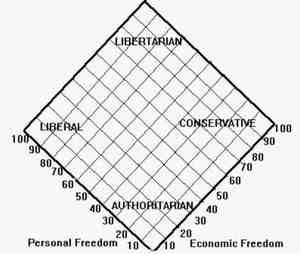 time – well, actually a libertarian Christian. In my attempt to persuade him that the feat was nowhere near as complicated as walking while chewing gum, I began ruminating once more on the exact opposite question: how can an educated person be a liberal? The reality of it stares us in the face daily. Besides the usual screed screamers that inhabit both sides of the political spectrum, there really are people of learning and goodwill who are of the collectivist bent.
More musings on this drove me to the starting point whereon was inscribed another more seminal question – what are the belief tenets of an educated liberal? Since I have come to know many liberals over the decades, most of whom are still close friends, I started scribbling down some of these tenets revealed from the many long and detailed conversations with these educated liberals.
Few people decide and act according to a known belief system comprised of tenets which may or not be coherent and consistent. Most people seem to act according to a jumble of heuristics or rules-of-thumb that life has added to their kit. Sometimes a consistent subset of these are glued together during moments of reflection and become shared wisdom. I first realized this about myself when I reached the half century mark during a year that was also my annus horribilis. As a result I produced the first edition of my belief system or credo that ran to about eleven pages and contained over seventy tenets. For me it was an eye-opener, and, as more water passed under the bridge, its succeeding editions continue to be valuable signposts of my growth, or to some, my decay.
Since then I have often fantasized about a world where people of good will hand each other their credo when they first meet (even before they embark on the “principled negotiations” taught by Fisher, Patton, and Ury). In my fantasy such deep and immediate knowledge of the other abets a society of harmonious efficiency and stimulating discourse as friends, colleagues, perhaps even voters who debate certain tenets of the other in the spirit of understanding and improvement. And then my reverie ends.
Returning in this light to the credo of the educated liberal, it is important to remember that the individual tenets collected below were seldom spelled out or noted as such in correspondence or conversations. They usually emerged as a result of an observation that a particular rule-of-thumb about good social behavior or order was a really an example of a more general notion that could be labeled a belief tenet. Such a tenet then became a useful shortcut in follow-on exchanges to identify and assess other derivative rules-of-thumb which, in the public square, are elevated to ‘social policy’, ‘regulations’, and even ‘law’. (In days gone by, I could append ‘mores’ and ‘values’ to the list, but no more.) I emphasize again that the tenets of a person’s credo need not be consistent under any given order of logic. (The learned reader knows that there are a countably infinite number of ‘logics’ – systems of logics – from which consistent and true statements can be cobbled. Humans just happen to use only a few of them in their daily round. In this sense Bill Clinton’s ‘Depends on what you mean by is.’ was a formally valid query).
So here is an incomplete list, in no particular order, of the tenets that I have witnessed educated liberals to hold dear either by direct profession or through strong implication deduced from their prescriptions for a better society. I conclude this list with the ‘Ten Tenets of a Liberal’ by law professor Geoffrey Stone which also conform to my experience with educated liberals. I can’t say that any one educated liberal holds fast to all of the tenets, yet the collection here represents one I believe to have the largest common intersection. Apprehending these may be useful, especially during this election season, when people of opposing views gather to share and compare them. For without knowing the launch point of ideas, such sessions almost always become an exchange of calcified ideologies each dismissed before its presentation is complete.
In the event that you, dear Reader, consider any of these in error or in need of correction, I ask you to submit such recommended remedies to me. These I promise to note and post, duly consider, and amend/append as needed in the sequel.
Selected Belief Tenets of the 21st Century Educated Liberal (EL)
1. The hallmark of a beneficial and beneficent society is equality. Any convenient metric of this outcome should be the final arbiter of social policy.
2. The beneficial societal attributes of liberty and equality can be increased concurrently. The modern EL denies the historical and demonstrably logical conclusion that liberty and equality are in fact opposite ends of a seesaw – to the extent that one increases, the other does the opposite.
3. The true and correct measure of equal opportunity is equal outcome. Population ratios of race, ethnicity, gender, sexual preference, education, age, health, etc. should be maintained as a demonstration of equal opportunity. Policy should be designed to assure this.
4. Taxing something either creates more of it or, at worst, does not affect its supply. Taxing someone does not, in any uncorrectable way, influence their behavior to avoid paying such mandatory tributes.
5. A multi-cultural society benefits all of its participating cultures. This strong EL tenet has no historical confirmation, yet remains a cornerstone of collectivist philosophy. The EL does not accept that multi-cultural societies have always either congealed into the dominant culture, which may itself change in the process, or have destroyed the social order that sought to contain them (as we are again witnessing all over the world today, including in our own country).
6. The sovereign nation-state is anathema to a beneficent future for mankind. The EL dreams of and works for a harmonious one-world future, and does not believe that this will lead to an autocracy delivering neither equality nor liberty to its citizens.
7. Competition in every area of human endeavor is prima facie suspect, and needs to be carefully managed since it is the natural arena from which inequality emerges.
8. People should be rewarded least for achievement, more should be given for the attempt, and most for just belonging to or participating in socially approved endeavors. The state is the best arbiter of all such awards. This is the seminal rule for recognizing and dealing with society’s classes.
9. Spirituality is a reprehensible relic to be eliminated from a progressive society. In the interval its practice and display in all corners of the public square should be proscribed.
10. The modern egalitarian state is Man’s highest achievement that bestows the blessings of peace and prosperity in equal measure on all.
11. Science is the only and all encompassing way to knowing all that is.
12. Life in general, and Man in particular, is nothing more than the current manifestations of variously evolved ‘wet computers’ – algorithmic aggregations of protoplasm. Their entire depths are open to scientific enquiry which will reveal all that they are. The personal fate of each is oblivion.
13. The EL holds that, for yet unknown reasons, human societies do not conform to the teachings of modern control and estimation theories. Nature abhors centralized repositories of knowledge and control, and always opts to express itself in the form of distributed systems that are robust and naturally sustainable.
14. Enforced peace, no matter its resulting human condition, is to be always preferred. The state is the obligated enforcer.
15. State selected elites can best manage society. All others should be leveled into an egalitarian amalgam to assure the greatest benefit to the highest number. Inter-class mobility should be carefully controlled.
16. Education of the young is the realm of the state. It is here where common values and mores are taught – ‘as the twig is bent …’. Parents should act as temporary agents of the state with limited purview over their offspring.
17. Labor should be sold only through the collective. Individual and/or ad hoc agreements between workers and management create inequalities between the unskilled unwanted and those skilled in demand.
18. The state can also create wealth. Therefore the ability to create wealth should not be a consideration in decisions to assign control of basic societal functions such as food production, healthcare, defense, transportation, communications, … to the state or private enterprise.
19. Private enterprise is suspect on its face because it delivers unequal and unpredictable results. Large private enterprises should be proscribed.
20. Profit is a socially suspect motivator since it arises out of greed.
21. Public policy, based on the expectation of the broad exercise of altruism, works. The desired altruistic behaviors can be shaped through properly designed education programs.
22. History is an informational asset of the state, and should be refreshed as necessary to serve the current needs of society as prescribed by the state. Alternate versions should not be tolerated.
23. All human attributes and characteristics may be shown to vary and be variously correlated with other attributes, save the attribute of intelligence. Making social policy on the basis of intelligence is anathema to a harmonious society and should be avoided wherever possible.
24. Private charities are suspect and their choice of recipients is hard to control. The state should be the arbiter and implementer of all wealth transfers.
25. There is actually no end to the ‘rights’ that people have and new ones can be discovered every day. The EL accepts and unhesitatingly points out such things as people’s rights to clean air, nutrition, healthcare, safe playgrounds, shelter, gainful employment, … and/or their absence which must be corrected by the state through its agents and/or dictats.
26. The integrity of the Bastiat Triangle of rights is an erroneous idea. Its three constituents – right to personal security, liberty of action, and ownership of property – are not co-dependent, and any one may be individually modified independent of the other two.
27. The world is mostly a decoupled place, thereby allowing policies to be made in the statist paradigm. There seems to be little belief in the dictum ‘you cannot just do one thing’.
28. People as individuals acting freely are not to be trusted to contribute to a salutary society. They are better considered and addressed in the aggregate or classes and, as such, marshaled wholesale.
29. If the government does not sponsor or enable some desirable social project, communication, or performance, then government is seen to ‘prohibit’ or ‘censor’ it. Such accusations may also be leveled at individuals, groups, and corporations.
30. “Liberals believe individuals should doubt their own truths and consider fairly and open-mindedly the truths of others. This is at the very heart of liberalism.” [G. Stone]
31. “Liberals believe individuals should be tolerant and respectful of difference.” [G.Stone]
32. “Liberals believe individuals have a right and a responsibility to participate in public debate.” [G. Stone]
33. “Liberals believe “we the people” are the governors and not the subjects of government, and that government must treat each person with that in mind.” [G. Stone]
34. “Liberals believe government must respect and affirmatively safeguard the liberty, equality and dignity of each individual.” [G. Stone]
35. “Liberals believe government has a fundamental responsibility to help those who are less fortunate.” [G. Stone]
36. “Liberals believe government should never act on the basis of sectarian faith.” [G. Stone]
37. “Liberals believe courts have a special responsibility to protect individual liberties.” [G. Stone]
38. “Liberals believe government must protect the safety and security of the people, for without such protection liberalism is impossible.” [G. Stone]
39. “Liberals believe government must protect the safety and security of the people, without
unnecessarily sacrificing constitutional values.” [G. Stone]
Now I wonder what a similar list, compiled by an Educated Liberal about the Educated Conservative or the Educated Libertarian, would look like.


Leave a Reply