

Jo Ann Rebane
Some cultural observations from Estonia:
• The Estonian people are physically beautiful, especially those in the big cities of Tallinn, Viljandi and Tartu.
• Service staff (hotel front desk, wait staff, store clerks) seem to have a aloof, couldn’t care less attitude. Friendly, helpful personnel are the exception. We’ve had particularly helpful young people manning the front desk here in Tartu. They are university students eager to speak English.
• People are strictly formal with newcomers, taking time to assess intent.
• There’s affluence here. We see Jeeps, Toyota land cruisers and families in minivans.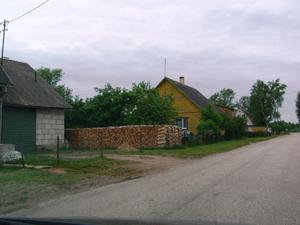 • On weekday mornings and evenings people walk with a sense of purpose, briskly headed to train, bus and job.
• Evenings we see people carrying cut flowers surrounded by a cone of brown paper and wonder who will get the flowers.
• In Tallinn we saw very few babies, so few that we began to count them. We counted on average ten a day in a city of 400,000 which seems very low. In Viljandi, population 20,000 and located in the center of the country, babies and mothers were everywhere so we abandoned counting strollers and buggies.
• It’s rare to see a police car – maybe 3 a day, total.
• These people, the youth in particular, haven’t heard or don’t believe that smoking causes cancer. Almost all smoke.
• The Otepää “alpine” resort area we visited reminded me of the German or Swiss alps except many fewer people have trod the paths, dropped their bottle caps, and snuffed out cigarette butts. Therefore that place seemed fresher. It’s also less crowded. Less impact from fewer people. Just wait!
• In the countryside the dominant color is green. Green rye and turnip fields, green forests, green weeds. It’s no wonder country housewives prefer bright red flowers in their gardens.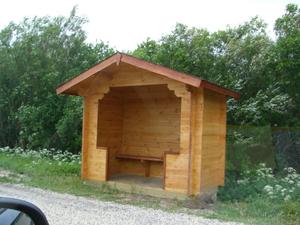 • There’s a bus stop about every two kilometers. Sometimes it’s just a wide spot in the road marked by a signpost. Other bus stops include a shelter of various designs with roof and benches.
• Wood piles. Wood is widely used for heating, probably year round. Therefore each dwelling, including apartment blocks have huge stacks of firewood. We have seen firewood stacked against a building, in free standing rows, covered and uncovered, massed in multiple rows, and the most interesting – in the shape of a stout cylinder.
• Field stones. Glaciation tumbled boulders across the land and deposited them everywhere. The smooth boulders which are too big to move have been left in fields and plowed around. Smaller stones are dug up and moved to the edge of the field and piled up there. In Otepää and in eastern Estonia near Lake Peipsi the stones have been arranged into low walls and to form planted garden mounds.
• Old people. We were told that it’s cheapest for them to live in very rural villages. You don’t see many really old people in the cities but it is common to see an old woman shuffle across a country lane oblivious to the occasional automobile.


 rebanesruminations.com
Leave a comment